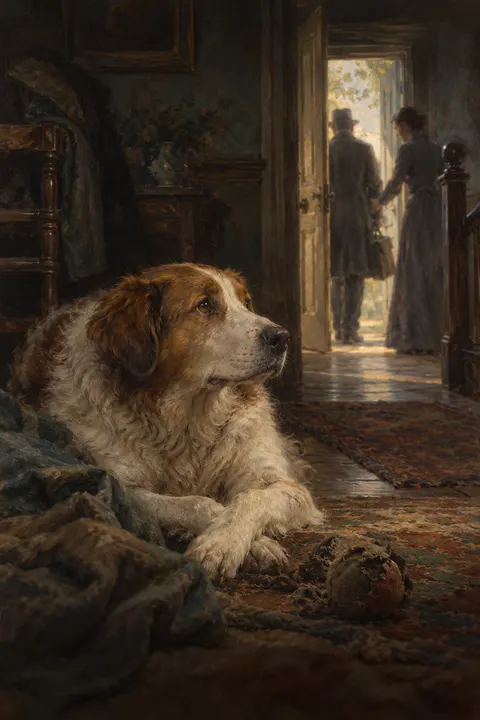
 A Dog's TaleMark Twain
OmniClassics · Literature
A Dog's Tale
Mark TwainA dog's trusting account makes a human household's moral claims painfully difficult to sustain.
Progress is saved in this browser
About the book
The canine narrator begins by recalling her mother's pride in impressive words and the lessons she learned about proper conduct. Her own experience in a human household initially gives loyalty and affection a secure place in the story. An emergency then tests how her actions will be interpreted by the people whose authority she accepts. Twain uses the gap between the dog's understanding and the reader's to move from linguistic comedy towards an examination of cruelty and gratitude. The narrator's inability to explain everything she observes makes familiar human justifications less reassuring rather than more persuasive. The tale asks what moral worth looks like when viewed from the position of a dependent creature, especially when intelligence and social status give the powerful the means to excuse behaviour that loyalty cannot comprehend.
- Loyalty
- Cruelty
- Unequal understanding
Why read it
For a brief narrative that turns an affectionate animal voice into a sharp test of human claims to moral superiority.
Short story · English text