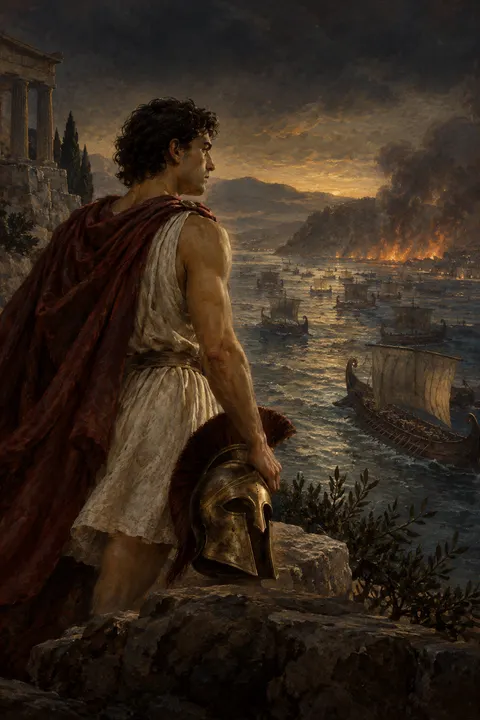
 A Victor of SalamisWilliam Stearns Davis
OmniClassics · Literature
A Victor of Salamis
William Stearns DavisA young Greek's personal fortunes unfold against the approaching conflict between the Greek cities and Xerxes' forces.
Progress is saved in this browser
About the book
William Stearns Davis uses the Persian invasion of Greece as the setting for a historical romance involving athletic distinction, rivalry, danger, and loyalty. Glaucon's story moves from public admiration into circumstances that test how reputation is made and lost. Familiar historical names and major battles provide the wider frame, while invented relationships give the narrative its immediate motives. The author's note makes clear that the book is historical fiction; its dramatic scenes should not be treated as documentary accounts. It also reflects a strongly partisan interpretation of the conflict, including assumptions about East and West that require critical distance. Readers can follow the adventure while separating the novel's judgments from the historical events it uses, and noticing how private honour becomes entangled with civic allegiance.
- Honour and reputation
- War and allegiance
- Historical adventure
Why read it
For a historical adventure that places personal loyalty under the pressure of a large public conflict.
English historical novel · 1907
Contents and reading sections
- Section 1
- Section 2
- Section 3
- Section 4
- Section 5
- Section 6
- Section 7
- Section 8
- Section 9
- Section 10
- Section 11
- Section 12
- Section 13
- Section 14
- Section 15
- Section 16
- Section 17
- Section 18
- Section 19
- Section 20
- Section 21
- Section 22
- Section 23
- Section 24
- Section 25
- Section 26
- Section 27
- Section 28
- Section 29
- Section 30
- Section 31
- Section 32
- Section 33
- Section 34
- Section 35
- Section 36
- Section 37
- Section 38
- Section 39
- Section 40
- Section 41
- Section 42
- Section 43
- Section 44
- Section 45
- Section 46
- Section 47
- Section 48
- Section 49
- Section 50
- Section 51
- Section 52
- Section 53
- Section 54
- Section 55
- Section 56
- Section 57
- Section 58
- Section 59
- Section 60
- Section 61
- Section 62