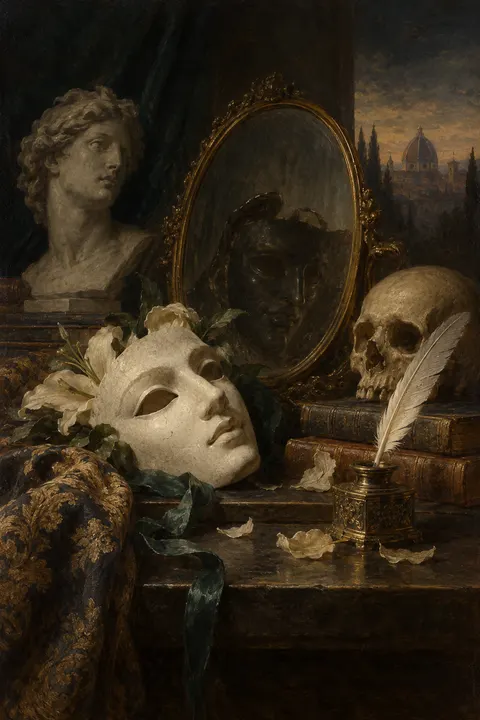
 IntentionsOscar Wilde
OmniClassics · Literature
Intentions
Oscar WildeArt and criticism become independent forms of creation in essays that use paradox to unsettle ordinary standards of truth.
Progress is saved in this browser
About the book
The Decay of Lying stages a dialogue in which imaginative invention is defended against the demand that art reproduce life faithfully. The Critic as Artist extends the provocation by treating interpretation as a creative activity with its own possibilities. Pen, Pencil, and Poison examines the disturbing conjunction of artistic cultivation and criminal conduct, while The Truth of Masks considers theatrical costume and historical effect. Across the collection, Wilde's wit is part of the reasoning: an apparent reversal asks readers to reconsider an assumption they may never have examined. The essays do not form a neutral handbook of aesthetic principles. They perform a lively argument for the freedom of art, while testing the relation between beauty, moral judgment, personality, and the ways people learn to see their world.
- Artistic invention
- Creative criticism
- Art and morality
Why read it
For aesthetic arguments whose wit and deliberate reversals make criticism itself a form of imaginative performance.
Critical essays and dialogues · English text