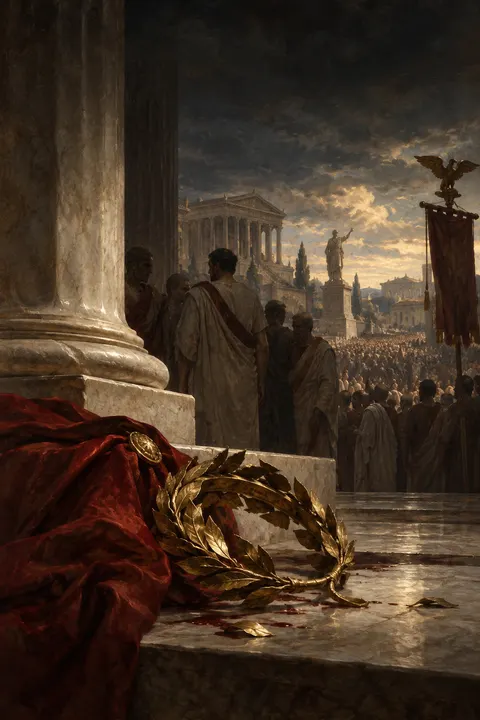
 Julius CaesarWilliam Shakespeare
OmniClassics · Literature
Julius Caesar
William ShakespeareAn attempt to defend a republic reveals how uncertain political motives become in public.
Progress is saved in this browser
About the book
Caesar's growing authority unsettles Romans who fear that personal rule may displace republican freedom. Brutus is drawn into a conspiracy whose members do not all share the same reasons for acting. Shakespeare concentrates on the difficulty of turning private conviction into justified public action, and on the consequences once action can no longer be controlled by intention. Friendship, persuasion, omens, and the interpretation of character shape decisions made under pressure. Public speeches become events in their own right, demonstrating how a crowd's understanding can change through rhetorical arrangement. The play refuses to make political language a transparent account of motive. Its tragedy follows people who believe they can determine history's direction and discover that others will tell the story of their deeds.
- Political responsibility
- Persuasion
- Intention and consequence
Why read it
For a searching drama of public action in which the battle over interpretation becomes as important as the action itself.
English text