 Love's Labour's LostWilliam Shakespeare
OmniClassics · Literature
Love's Labour's Lost
William ShakespeareA solemn plan for study meets the disruptive intelligence of courtship.
Progress is saved in this browser
About the book
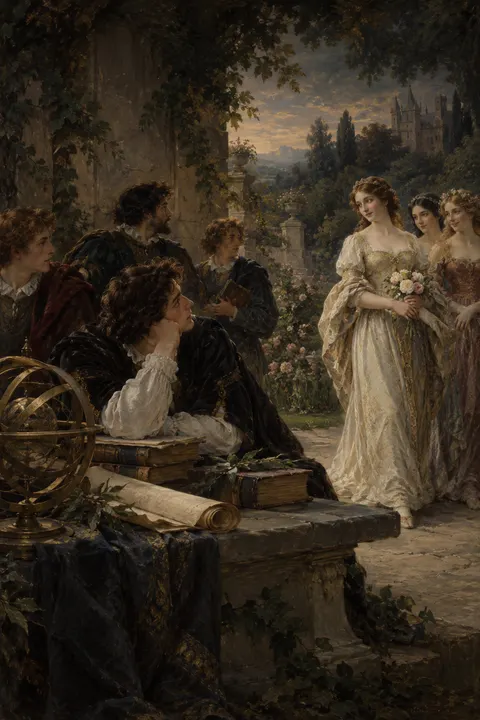
The King of Navarre and his companions commit themselves to a disciplined period of study, including restrictions on food, sleep, and female company. The arrival of a princess and her attendants makes their arrangement difficult to maintain almost at once. Shakespeare turns the conflict into a comedy of linguistic display, concealed desire, overheard confessions, and performances that fail to produce their intended effect. The men try to manage love through the same competitive ingenuity with which they framed their rules, while the women prove alert to the distance between elegant speech and reliable feeling. Comic subplots extend the play's interest in verbal pretension. Its pleasures reward a reader willing to follow puns and formal games while watching the assumptions those games unexpectedly expose.
- Language and display
- Love and discipline
- Self-deception
Why read it
For exuberant verbal comedy in which wit repeatedly reveals more than its speakers mean to confess.
English text