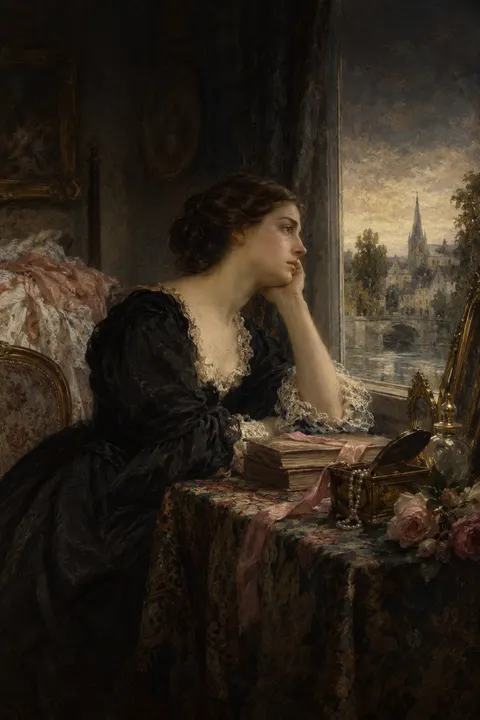
 Madame BovaryGustave Flaubert
OmniClassics · Literature
Madame Bovary
Gustave FlaubertA provincial marriage falls short of the intensity a woman has learned to expect from life.
Progress is saved in this browser
About the book
Emma marries Charles Bovary hoping that adulthood and love will supply the excitement promised by her reading and imagination. The routines of provincial life soon seem painfully inadequate to those expectations. Flaubert follows the ways she seeks distinction through romance, possessions, and imagined alternatives, while surrounding her with people whose ambitions and certainties receive equally exacting attention. Charles's limitations do not make Emma's desires simple, and the novel's irony keeps sympathy and criticism in uneasy proximity. Money gives apparently private wishes practical consequences. Through precise scenes of conversation, ceremony, and domestic routine, the narrative examines how borrowed language can shape a person's understanding of happiness. Its pressure comes from the widening distance between an experience as it is lived and the story someone wants it to fulfil.
- Desire and illusion
- Marriage
- Consumption
Why read it
For exact social observation and a sustained examination of how imagined happiness can transform ordinary dissatisfaction.
English translation by Eleanor Marx-Aveling
Contents and reading sections
- Section 1
- Section 2
- Section 3
- Section 4
- Section 5
- Section 6
- Section 7
- Section 8
- Section 9
- Section 10
- Section 11
- Section 12
- Section 13
- Section 14
- Section 15
- Section 16
- Section 17
- Section 18
- Section 19
- Section 20
- Section 21
- Section 22
- Section 23
- Section 24
- Section 25
- Section 26
- Section 27
- Section 28
- Section 29
- Section 30
- Section 31
- Section 32
- Section 33
- Section 34
- Section 35
- Section 36
- Section 37
- Section 38
- Section 39
- Section 40
- Section 41
- Section 42
- Section 43
- Section 44
- Section 45
- Section 46
- Section 47
- Section 48
- Section 49
- Section 50
- Section 51
- Section 52
- Section 53
- Section 54
- Section 55
- Section 56