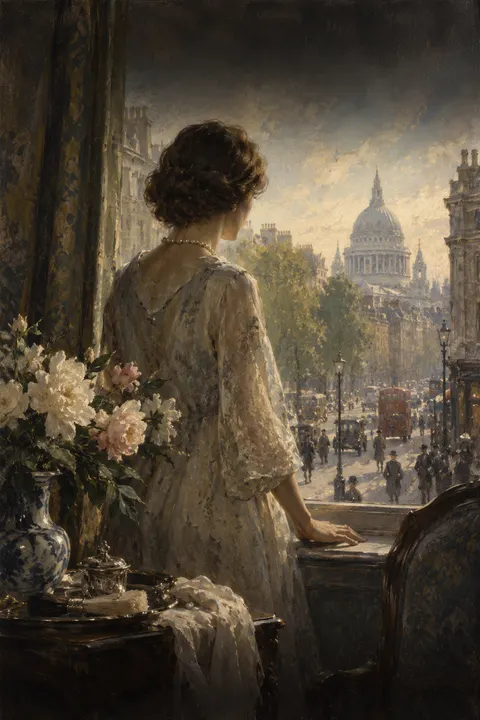
 Mrs. DallowayVirginia Woolf
OmniClassics · Literature
Mrs. Dalloway
Virginia WoolfOne London day brings the present into intimate contact with remembered lives.
Progress is saved in this browser
About the book
Clarissa Dalloway prepares for an evening party while London moves around her in errands, traffic, encounters, and public sounds. Her day repeatedly opens into memories of youth and into questions about the life she has chosen. Elsewhere, Septimus Warren Smith and his wife face the continuing effects of war and the judgments of those expected to help them. Woolf moves between minds without reducing their experiences to a single explanation, making a passing sight or sound connect lives that remain socially distant. The novel's action is modest in outward scale but expansive in inward movement. It asks how memory inhabits an ordinary day, how people remain partly unknown to their closest companions, and what forms of connection a gathering can offer.
- Memory and time
- Private experience
- Connection and isolation
Why read it
For the fluid movement between minds that makes an ordinary city day feel spacious and intensely alive.
English text
Contents and reading sections
- Section 1
- Section 2
- Section 3
- Section 4
- Section 5
- Section 6
- Section 7
- Section 8
- Section 9
- Section 10
- Section 11
- Section 12
- Section 13
- Section 14
- Section 15
- Section 16
- Section 17
- Section 18
- Section 19
- Section 20
- Section 21
- Section 22
- Section 23
- Section 24
- Section 25
- Section 26
- Section 27
- Section 28
- Section 29
- Section 30
- Section 31