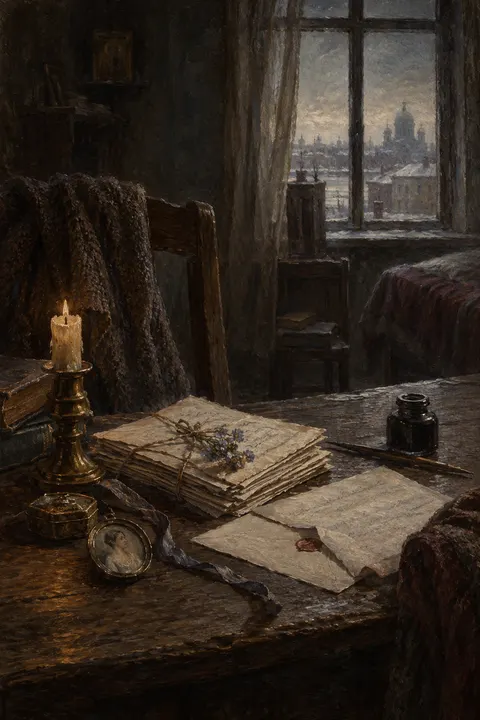
 Poor FolkFyodor Dostoyevsky
OmniClassics · Literature
Poor Folk
Fyodor DostoyevskyTwo correspondents try to preserve tenderness and dignity under the pressure of poverty.
Progress is saved in this browser
About the book
Makar Alexievitch writes to Barbara Alexievna with an intensity that turns a lifted curtain into a cherished sign of companionship. Their letters connect rooms, daily expenses, work, memories, and the small gifts through which each tries to care for the other. The form gives hardship an intimate scale: money matters because of what it permits someone to say, conceal, give, or refuse. Dostoyevsky lets the correspondents explain themselves while also revealing the limits of their explanations. Pride can protect dignity and make help difficult to accept at the same time. The novel rewards attention to changes in tone as practical difficulties enter affectionate exchanges. Its emotional force depends less on a panoramic view of society than on the fragile connection maintained between two particular voices.
- Poverty and dignity
- Care and dependence
- Letters and intimacy
Why read it
For a brief epistolary novel that makes the social meaning of small gestures vividly personal.
C. J. Hogarth English translation