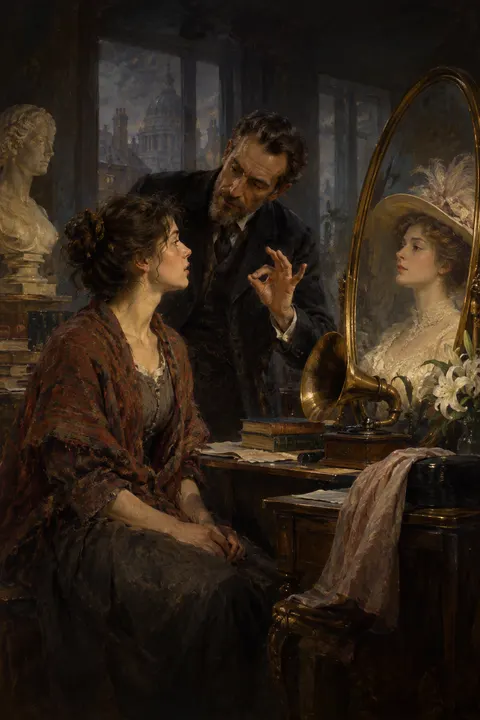
 PygmalionBernard Shaw
OmniClassics · Literature
Pygmalion
Bernard ShawA change of speech opens social doors without deciding who will control the new life.
Progress is saved in this browser
About the book
Eliza Doolittle's pronunciation marks her social position before strangers have learned anything else about her. Henry Higgins's confidence that he can transform the way she is perceived turns that fact into an experiment in education and performance. Shaw draws comedy from the habits by which class is heard and recognised, but gives Eliza's practical future increasing importance. Learning to pass in a different social world does not automatically supply money, work, respect, or freedom from the person claiming credit for the transformation. The exchanges between Eliza, Higgins, and those around them repeatedly test the difference between producing a convincing appearance and treating someone as an independent person. The play makes a familiar improvement story answerable to the wishes of the person supposedly improved.
- Class and language
- Education
- Independence
Why read it
For a sharply comic examination of who benefits when a person's social identity is treated as someone else's achievement.
English text