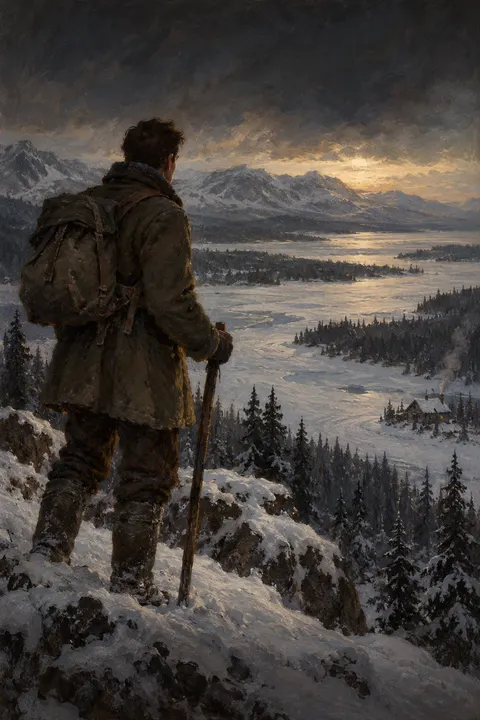
 Snow-blindAlbert M. Treynor
OmniClassics · Literature
Snow-blind
Albert M. TreynorA cryptic radio message draws a young New Yorker north toward two disappearances in his own family.
Progress is saved in this browser
About the book
Kitchener Tearl is listening casually to the radio when a message addressed to a Canadian mounted policeman catches his attention. The recipient's surname suggests his missing brother, while the message itself awakens hope concerning their father, a police inspector who vanished years earlier. Leaving the security of New York, Kitchener follows these uncertain connections into a northern world already powerful in his family imagination. Treynor joins a search for lost relatives to a wilderness adventure involving suspicious strangers, concealed identities, and dangerous travel. The modern broadcast that starts the journey contrasts with the maps, trails, and personal encounters needed to continue it. Kitchener's eagerness to believe that the past can be recovered must contend with evidence that remains fragmentary and difficult to trust.
- Family memory
- Identity and disappearance
- Wilderness survival
Why read it
The opening radio broadcast makes distant family history suddenly immediate, giving the northern journey a strong personal motive.
English Grosset & Dunlap text marked second printing, April 1929
Contents and reading sections
- Section 1
- Section 2
- Section 3
- Section 4
- Section 5
- Section 6
- Section 7
- Section 8
- Section 9
- Section 10
- Section 11
- Section 12
- Section 13
- Section 14
- Section 15
- Section 16
- Section 17
- Section 18
- Section 19
- Section 20
- Section 21
- Section 22
- Section 23
- Section 24
- Section 25
- Section 26
- Section 27
- Section 28
- Section 29
- Section 30
- Section 31
- Section 32
- Section 33
- Section 34
- Section 35
- Section 36
- Section 37
- Section 38
- Section 39