 Sons and LoversD. H. Lawrence
OmniClassics · Literature
Sons and Lovers
D. H. LawrenceA young man's emotional life develops within a family whose intimacy is inseparable from disappointment and conflict.
Progress is saved in this browser
About the book
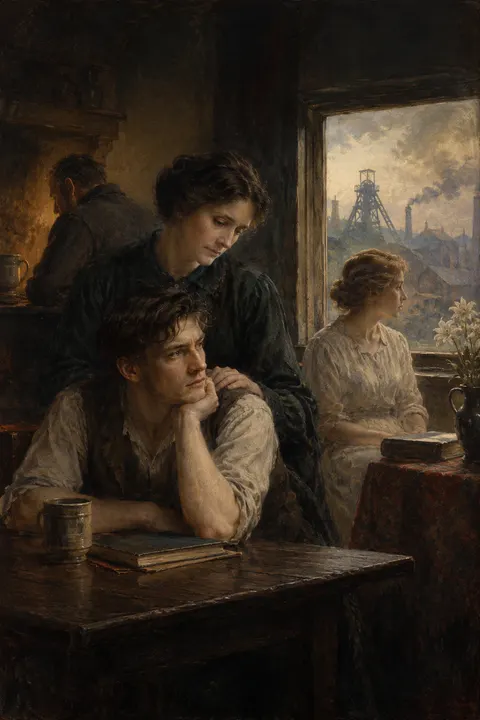
The Morel household begins with the troubled marriage of Gertrude and Walter, a miner whose habits and circumstances increasingly estrange his wife. Her intense investment in her children shapes the world in which Paul grows towards work, artistic aspiration, and adult attachment. Relationships with Miriam and Clara offer different forms of connection, yet neither can be understood apart from the bond with his mother. Lawrence gives domestic argument, industrial labour, landscape, bodily sensation, and changing moods an unusually immediate presence. The novel does not reduce its conflicts to a single declared motive: affection can sustain a person while also making separation difficult. Its account of growing up asks how a life can become independent when the feelings that nourish it also establish the terms on which other relationships are judged.
- Family attachment
- Independence
- Desire and conflict
Why read it
For an emotionally detailed account of formation in which family intimacy shapes the possibilities and limits of adult love.
Novel · English text
Contents and reading sections
- Section 1
- Section 2
- Section 3
- Section 4
- Section 5
- Section 6
- Section 7
- Section 8
- Section 9
- Section 10
- Section 11
- Section 12
- Section 13
- Section 14
- Section 15
- Section 16
- Section 17
- Section 18
- Section 19
- Section 20
- Section 21
- Section 22
- Section 23
- Section 24
- Section 25
- Section 26
- Section 27
- Section 28
- Section 29
- Section 30
- Section 31
- Section 32
- Section 33
- Section 34
- Section 35
- Section 36
- Section 37
- Section 38
- Section 39
- Section 40
- Section 41
- Section 42
- Section 43
- Section 44
- Section 45
- Section 46
- Section 47
- Section 48
- Section 49
- Section 50
- Section 51
- Section 52
- Section 53
- Section 54
- Section 55
- Section 56
- Section 57
- Section 58
- Section 59
- Section 60
- Section 61
- Section 62
- Section 63
- Section 64
- Section 65
- Section 66
- Section 67
- Section 68
- Section 69
- Section 70
- Section 71
- Section 72
- Section 73
- Section 74
- Section 75
- Section 76