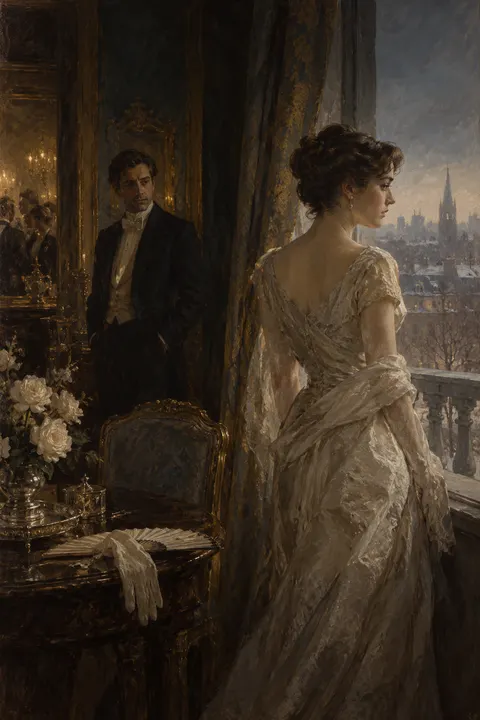
 The Age of InnocenceEdith Wharton
OmniClassics · Literature
The Age of Innocence
Edith WhartonA man proud of his independence discovers the quiet authority of his social world.
Progress is saved in this browser
About the book
Newland Archer anticipates marriage to May Welland within a New York circle whose rules seem natural because they rarely need to be stated. The arrival of May's cousin Ellen Olenska unsettles his confidence, offering a perspective shaped by different experiences and expectations. Wharton makes dinners, visits, clothes, and apparently tactful silences into instruments of social judgment. Newland's attraction to freedom is itself examined, including the comforts and assumptions he carries into his imagined alternatives. The narrative asks how much a person understands the people whose lives he considers simple. Its emotional pressure comes from the gap between explicit agreement and the meanings a community can enforce without openly discussing them. Courtesy becomes a language capable of both protection and exclusion.
- Social convention
- Desire
- Self-knowledge
Why read it
For the precision with which Wharton makes unstated rules visible and questions the narrator's apparent access to other minds.
English text
Contents and reading sections
- Section 1
- Section 2
- Section 3
- Section 4
- Section 5
- Section 6
- Section 7
- Section 8
- Section 9
- Section 10
- Section 11
- Section 12
- Section 13
- Section 14
- Section 15
- Section 16
- Section 17
- Section 18
- Section 19
- Section 20
- Section 21
- Section 22
- Section 23
- Section 24
- Section 25
- Section 26
- Section 27
- Section 28
- Section 29
- Section 30
- Section 31
- Section 32
- Section 33
- Section 34
- Section 35
- Section 36
- Section 37
- Section 38
- Section 39
- Section 40
- Section 41
- Section 42
- Section 43
- Section 44
- Section 45
- Section 46
- Section 47
- Section 48
- Section 49
- Section 50