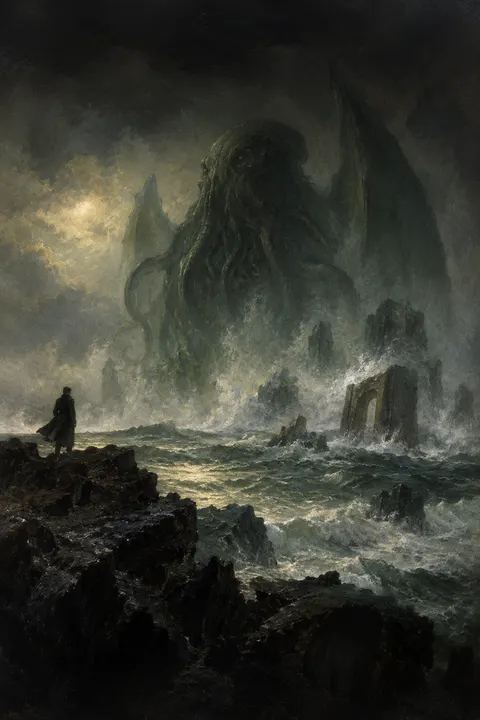
 The call of CthulhuH. P. Lovecraft
OmniClassics · Literature
The call of Cthulhu
H. P. LovecraftScattered records begin to suggest a pattern their investigator would rather not understand.
Progress is saved in this browser
About the book
An inherited collection of papers leads a narrator to compare disturbing dreams, unusual objects, reported rituals, and an account from the sea. Lovecraft constructs the story through separate pieces of testimony, allowing correspondences to become more threatening as they accumulate. The method resembles an investigation, but its discoveries promise neither mastery nor reassurance. Events that initially seem local point towards dimensions of time and existence in which human concerns carry very little weight. The narrator's alarm also arrives through his own prejudices and assumptions, which readers must distinguish from the evidence he assembles. The story's force lies in the relation between curiosity and dread: each connection makes the account more coherent while weakening the investigator's hope that coherence will make the world more secure.
- Knowledge and dread
- Human insignificance
- Fragmented testimony
Why read it
For a compact investigation in which assembling the evidence makes its implications increasingly disturbing.
English text