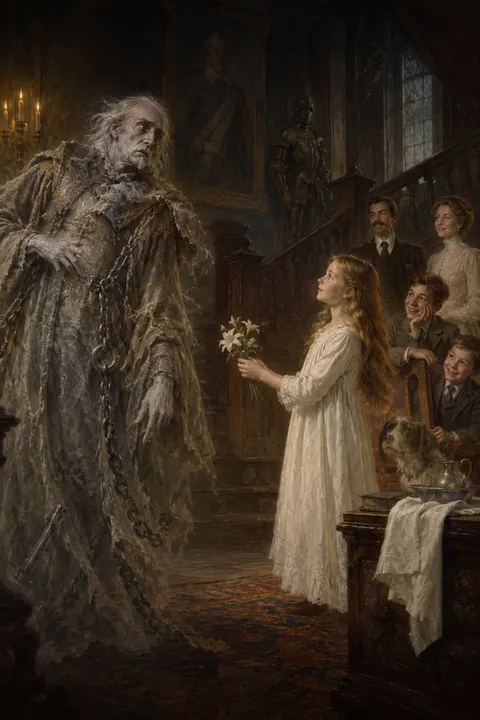
 The Canterville GhostOscar Wilde
OmniClassics · Literature
The Canterville Ghost
Oscar WildeA traditional ghost meets a family that refuses to observe the rules of haunting.
Progress is saved in this browser
About the book
An American family takes possession of an English country house despite warnings about its resident ghost. Their practical response to supernatural disturbances affronts Sir Simon's sense of his own theatrical dignity, turning familiar Gothic effects into comic failures. Wilde enjoys the collision between inherited legend and brisk modern confidence, giving household products and irreverent children roles in the contest. Yet the story does not remain simply a joke at the ghost's expense. Virginia's different response opens questions of suffering, sympathy, and the meaning of release. The shift in tone allows a figure introduced through frightening performance to become an object of concern. The tale's pleasure lies in the movement between parody and tenderness, making attention to another being more effective than either fear or mockery.
- Tradition and modernity
- Compassion
- Performance
Why read it
For a ghost story that turns its comic reversal of Gothic conventions towards an unexpectedly gentle emotional centre.
English text