 The Hawk of EgyptJoan Conquest
OmniClassics · Literature
The Hawk of Egypt
Joan ConquestAn encounter in a Cairo animal market begins a romance shaped by competing cultures and an insistence on destiny.
Progress is saved in this browser
About the book
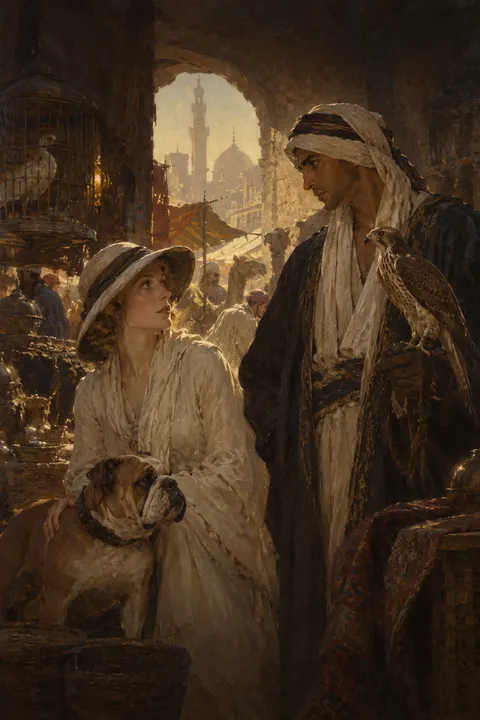
Damaris Hethencourt enters Cairo's crowded markets with her bulldog Wellington, eager to find the animals sold beyond the familiar tourist streets. There she notices Hugh Carden Ali, the son of an Egyptian sheikh and an English mother, whose appearance unsettles her easy assumptions about nationality. Conquest builds a desert romance from this meeting, surrounding attraction with family history, danger, and an elaborate language of fate. Animals, richly described interiors, and the contrast between English society and desert life help create the book's atmosphere. Its fascination with cultural difference is inseparable from the racial stereotypes and romanticized views of Egypt that shape the narration. Read as period fiction, it reveals how desire and inherited identity become the organizing mysteries of an exotic adventure.
- Desire and destiny
- Mixed cultural identity
- Romanticized landscapes
Why read it
The first encounter makes Damaris's uncertainty about Hugh's identity central to both the attraction and the novel's period assumptions.
English Macaulay Company edition, copyright 1922
Contents and reading sections
- Section 1
- Section 2
- Section 3
- Section 4
- Section 5
- Section 6
- Section 7
- Section 8
- Section 9
- Section 10
- Section 11
- Section 12
- Section 13
- Section 14
- Section 15
- Section 16
- Section 17
- Section 18
- Section 19
- Section 20
- Section 21
- Section 22
- Section 23
- Section 24
- Section 25
- Section 26
- Section 27
- Section 28
- Section 29
- Section 30
- Section 31
- Section 32
- Section 33
- Section 34
- Section 35
- Section 36
- Section 37
- Section 38