 The Jungle BookRudyard Kipling
OmniClassics · Literature
The Jungle Book
Rudyard KiplingAnimal stories explore the rules, rivalries, and loyalties that make a community possible.
Progress is saved in this browser
About the book
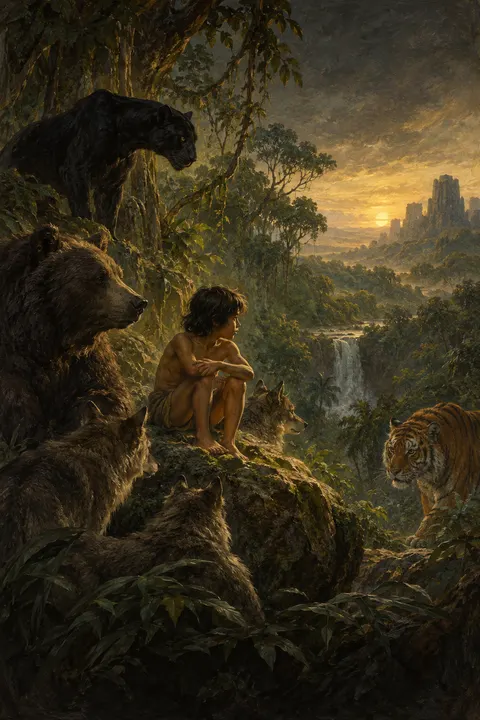
The opening stories follow Mowgli, a child raised among wolves, as he learns the relationships and laws of the jungle. His position between human and animal worlds makes belonging a practical problem rather than a simple inheritance. This collection also travels beyond Mowgli's story, including a seal's search, a mongoose's contest with cobras, and encounters involving elephants and working animals. Songs accompany the tales, changing their pace and giving the imagined communities distinctive voices. Kipling joins vivid action to questions about instruction, courage, authority, and the obligations of membership. The animals are individually memorable while also carrying arguments about social order. Reading the whole collection reveals a wider range of settings and perspectives than the familiar image of the jungle child alone might suggest.
- Belonging
- Rules and responsibility
- Courage
Why read it
For varied animal adventures whose songs and sharply drawn relationships give each community a different character.
Stories and poems · English text