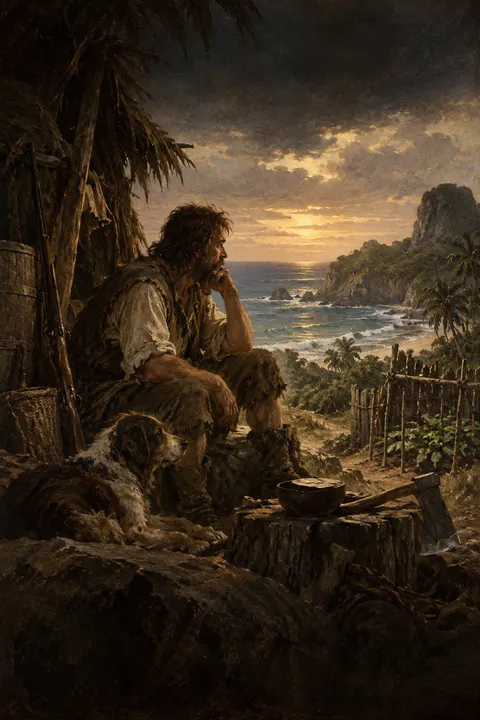
 The Life and Adventures of Robinson CrusoeDaniel Defoe
OmniClassics · Literature
The Life and Adventures of Robinson Crusoe
Daniel DefoeA castaway rebuilds daily life and interprets what his survival means.
Progress is saved in this browser
About the book
Robinson Crusoe pursues a life at sea against family advice, only to find that adventure can become prolonged isolation. After a shipwreck leaves him on an island, tools, shelter, food, and the measurement of time acquire an importance they never had at home. Defoe makes practical labour central to the narrative, recording experiments, setbacks, calculations, and the gradual construction of a habitable routine. Crusoe also reads his experiences through religious reflection and assumptions about ownership and authority. Encounters with others complicate the apparent independence he has built. The book offers the absorbing detail of survival while inviting attention to the beliefs its narrator carries into an unfamiliar place. Resourcefulness and the desire for mastery repeatedly appear as closely connected parts of his character.
- Survival and labour
- Isolation
- Ownership and authority
Why read it
For the detailed process of making a life from limited resources and the revealing voice that records it.
English text
Contents and reading sections
- Section 1
- Section 2
- Section 3
- Section 4
- Section 5
- Section 6
- Section 7
- Section 8
- Section 9
- Section 10
- Section 11
- Section 12
- Section 13
- Section 14
- Section 15
- Section 16
- Section 17
- Section 18
- Section 19
- Section 20
- Section 21
- Section 22
- Section 23
- Section 24
- Section 25
- Section 26
- Section 27
- Section 28
- Section 29
- Section 30
- Section 31
- Section 32
- Section 33
- Section 34
- Section 35
- Section 36
- Section 37
- Section 38
- Section 39
- Section 40
- Section 41
- Section 42
- Section 43
- Section 44
- Section 45
- Section 46
- Section 47
- Section 48
- Section 49
- Section 50
- Section 51
- Section 52
- Section 53