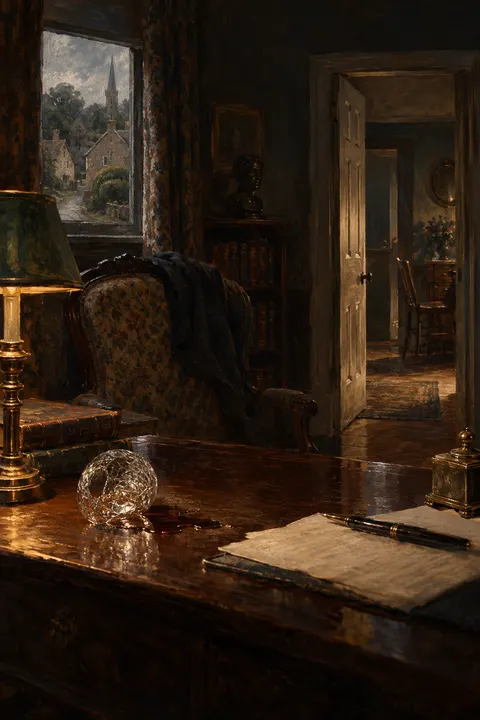
 The murder of Roger AckroydAgatha Christie
OmniClassics · Literature
The murder of Roger Ackroyd
Agatha ChristieA village murder puts household secrets under Poirot's patient scrutiny.
Progress is saved in this browser
About the book
King's Abbot offers the appearance of a place where everyone knows everyone else's business. The death of Roger Ackroyd reveals how much private knowledge can remain hidden within that familiarity. Dr Sheppard records the investigation as Hercule Poirot, recently settled nearby, examines the household's statements, movements, and carefully maintained impressions. Christie makes ordinary conversation and domestic arrangements carry the weight of clues, inviting attention to timing as well as motive. People may conceal facts for reasons that do not immediately identify them as criminals, making each discovery a fresh problem of interpretation. The novel's appeal lies in watching an apparently manageable circle of suspects become increasingly complicated. It rewards a reader willing to keep track of precisely what has been established and what has merely been assumed.
- Secrecy
- Evidence
- Village society
Why read it
For a carefully constructed investigation that gives everyday statements and small discrepancies unusual importance.
English text
Contents and reading sections
- Section 1
- Section 2
- Section 3
- Section 4
- Section 5
- Section 6
- Section 7
- Section 8
- Section 9
- Section 10
- Section 11
- Section 12
- Section 13
- Section 14
- Section 15
- Section 16
- Section 17
- Section 18
- Section 19
- Section 20
- Section 21
- Section 22
- Section 23
- Section 24
- Section 25
- Section 26
- Section 27
- Section 28
- Section 29
- Section 30
- Section 31
- Section 32
- Section 33
- Section 34
- Section 35