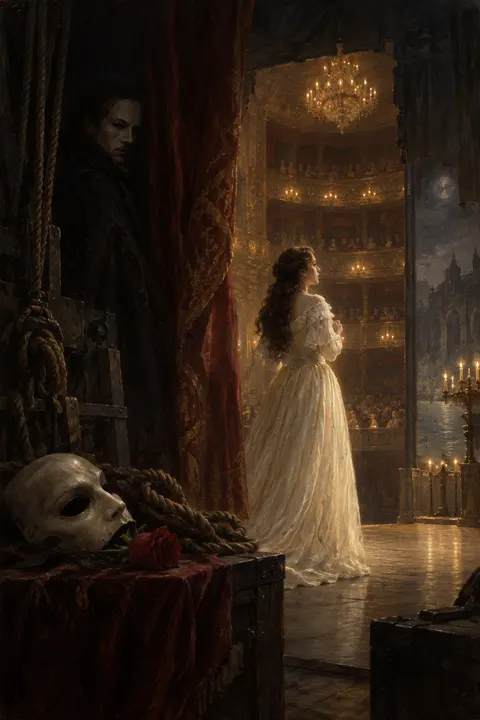
 The Phantom of the OperaGaston Leroux
OmniClassics · Literature
The Phantom of the Opera
Gaston LerouxAn opera house's splendour conceals a struggle over a young singer's voice and freedom.
Progress is saved in this browser
About the book
Strange demands and frightening incidents trouble the Paris Opera, where managers and performers must decide what to believe about the reputed ghost. Christine Daaé's remarkable singing draws attention to a private history that her friend Raoul cannot readily understand. Leroux makes the building's passages, machinery, public spaces, and concealed depths part of an elaborate mystery, allowing theatrical illusion to become a practical instrument of power. The account adopts the energy of an investigation while moving through romance and Gothic suspense. Christine's musical promise is entangled with dependence, fear, and competing claims upon her affection. The novel asks readers to consider the difference between nurturing an artist and attempting to possess her, as the world behind the performance becomes more dangerous than anything presented on the stage.
- Art and control
- Appearance and secrecy
- Possessive love
Why read it
For a Gothic mystery that turns an opera house's physical and theatrical machinery into the means of its suspense.
English translation
Contents and reading sections
- Section 1
- Section 2
- Section 3
- Section 4
- Section 5
- Section 6
- Section 7
- Section 8
- Section 9
- Section 10
- Section 11
- Section 12
- Section 13
- Section 14
- Section 15
- Section 16
- Section 17
- Section 18
- Section 19
- Section 20
- Section 21
- Section 22
- Section 23
- Section 24
- Section 25
- Section 26
- Section 27
- Section 28
- Section 29
- Section 30
- Section 31
- Section 32
- Section 33
- Section 34
- Section 35
- Section 36
- Section 37
- Section 38
- Section 39
- Section 40
- Section 41