 The Picture of Dorian GrayOscar Wilde
OmniClassics · Literature
The Picture of Dorian Gray
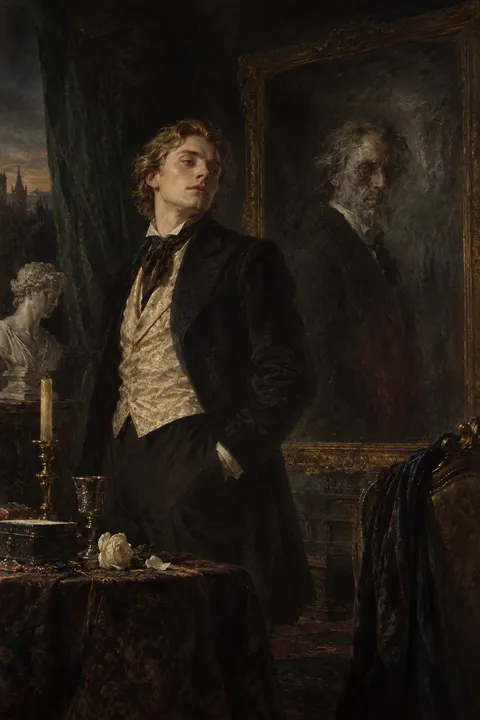
Oscar WildeA portrait gives a young man's fascination with beauty an unsettling material form.
Progress is saved in this browser
About the book
Dorian Gray discovers the force of his own beauty through a portrait painted by Basil Hallward and through Lord Henry's seductive talk about youth and pleasure. A wish to escape the visible effects of time gives that fascination a disturbing direction. Wilde combines drawing-room brilliance with secrecy, moral evasion, and Gothic atmosphere, allowing charming speech to become part of the danger. The relationship between a person and an image raises questions about what appearance reveals and what it can conceal. Dorian's encounters test the distance between treating life as an aesthetic experience and recognising other people as more than impressions. The novel's wit keeps judgment lively and uncertain, while its central image makes consequences impossible to reduce to a matter of reputation.
- Beauty and appearance
- Influence
- Moral responsibility
Why read it
For the uneasy relationship between dazzling conversation and the darker uses to which its ideas are put.
English text
Contents and reading sections
- Section 1
- Section 2
- Section 3
- Section 4
- Section 5
- Section 6
- Section 7
- Section 8
- Section 9
- Section 10
- Section 11
- Section 12
- Section 13
- Section 14
- Section 15
- Section 16
- Section 17
- Section 18
- Section 19
- Section 20
- Section 21
- Section 22
- Section 23
- Section 24
- Section 25
- Section 26
- Section 27
- Section 28
- Section 29
- Section 30
- Section 31
- Section 32
- Section 33
- Section 34
- Section 35
- Section 36
- Section 37