 The strange transfiguration of Hannah StubbsFlorence Marryat
OmniClassics · Literature
The strange transfiguration of Hannah Stubbs
Florence MarryatAn Italian exile's obsession with his dead wife draws a doctor and a young servant into occult experiments.
Progress is saved in this browser
About the book
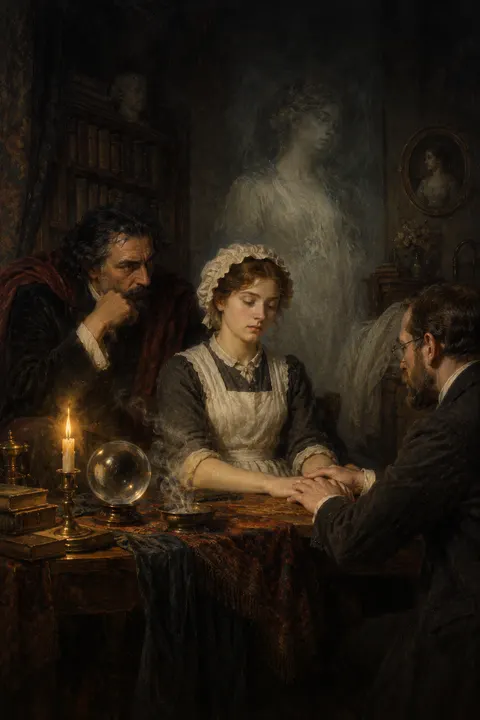
In a Soho lodging-house, Signor Ricardo earns a modest living teaching Italian while reserving one room for studies he conceals from his landlady. His friend Dr. Steinberg worries that the nightly experiments are destroying his health. Ricardo's explanation reaches back to a marriage governed by jealousy and to questions about his dead wife that he cannot leave unanswered. The arrival of Hannah Stubbs, a country girl employed as a servant, offers the men a possible means of pursuing contact with the unseen world. Marryat places supernatural investigation within a household whose unequal relationships already shape what people are allowed to know and do. The desire for certainty about the past becomes inseparable from the consequences of treating another person as the instrument of that desire.
- Jealousy and remorse
- Mediumship and power
- Women and autonomy
Why read it
The contrast between Hannah's domestic position and the men's ambitious investigations makes the occult premise a question of human power as well as belief.
English Hutchinson and Co. edition of 1896
Contents and reading sections
- Section 1
- Section 2
- Section 3
- Section 4
- Section 5
- Section 6
- Section 7
- Section 8
- Section 9
- Section 10
- Section 11
- Section 12
- Section 13
- Section 14
- Section 15
- Section 16
- Section 17
- Section 18
- Section 19
- Section 20
- Section 21
- Section 22
- Section 23
- Section 24
- Section 25
- Section 26
- Section 27
- Section 28
- Section 29
- Section 30
- Section 31
- Section 32
- Section 33
- Section 34
- Section 35
- Section 36
- Section 37