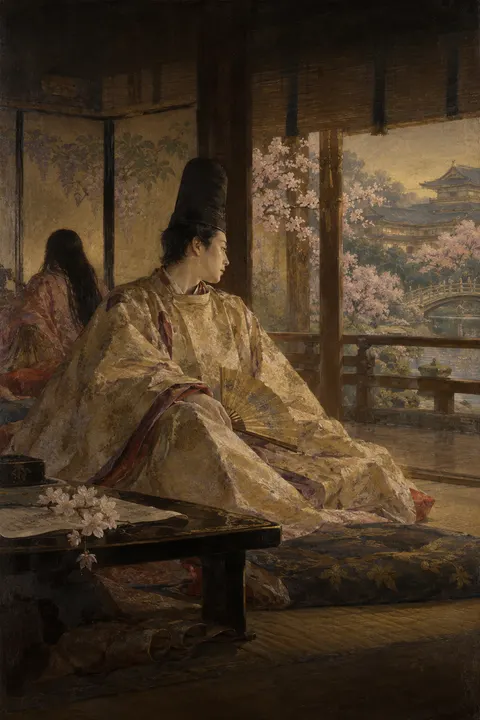
 The tale of GenjiMurasaki Shikibu
OmniClassics · Literature
The tale of Genji
Murasaki ShikibuAt an imperial court, a young man's charm and privileged position cannot protect him from longing, rivalry, or loss.
Progress is saved in this browser
About the book
Arthur Waley's opening volume of The Tale of Genji introduces a courtly world where rank, poetry, seasonal observance, and carefully managed appearances shape intimate life. Genji moves through relationships in which desire is inseparable from unequal power and the demands of reputation. Much happens indirectly: a poem, a rumour, a visit, or a change of residence can carry consequences that an explicit declaration would miss. The narrative also gives attention to the women affected by these arrangements, making emotional vulnerability part of its account of privilege. This volume is not the whole of the long Japanese work. Waley's introductory material frames his English rendering, and readers can follow both the story's delicate social signals and the limitations of Genji's own understanding.
- Court and rank
- Desire and reputation
- Memory and loss
Why read it
For a richly observant account of relationships conducted through poetry, ceremony, and implication.
Arthur Waley's English translation · opening volume, 1925
Contents and reading sections
- Section 1
- Section 2
- Section 3
- Section 4
- Section 5
- Section 6
- Section 7
- Section 8
- Section 9
- Section 10
- Section 11
- Section 12
- Section 13
- Section 14
- Section 15
- Section 16
- Section 17
- Section 18
- Section 19
- Section 20
- Section 21
- Section 22
- Section 23
- Section 24
- Section 25
- Section 26
- Section 27
- Section 28
- Section 29
- Section 30
- Section 31
- Section 32
- Section 33
- Section 34
- Section 35
- Section 36
- Section 37
- Section 38
- Section 39
- Section 40
- Section 41
- Section 42
- Section 43
- Section 44
- Section 45
- Section 46