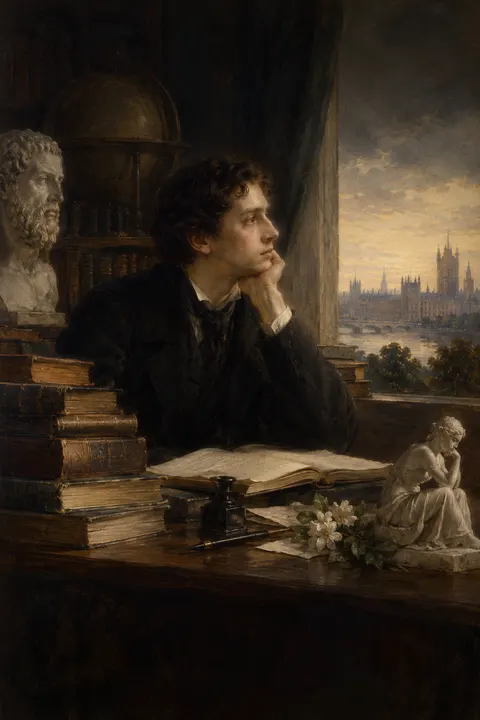
 AutobiographyJohn Stuart Mill
OmniClassics · Literature
Autobiography
John Stuart MillAn extraordinary education becomes the starting point for an account of intellectual crisis and the revision of inherited convictions.
Progress is saved in this browser
About the book
Mill recalls the demanding education directed by his father, describing early study and the formation of an energetic commitment to intellectual and social reform. His account then examines a crisis that exposed the limits of an outlook organized around analysis and the pursuit of public improvement. Poetry, feeling, friendship, and new influences become part of a more complicated understanding of human development. The narrative also traces his writings, work, marriage to Harriet Taylor, and participation in political life. Mill presents the history of his mind as something readers may find useful, rather than merely as a sequence of personal events. That purpose makes the book both a record of unusual formation and an inquiry into what an education can cultivate, overlook, and eventually need to repair.
- Education
- Intellectual development
- Feeling and reason
Why read it
For a candid account of how a powerful intellectual education could require later revision through feeling, poetry, and relationship.
Autobiography · English text with bracketed supplementary passages
Contents and reading sections
- Section 1
- Section 2
- Section 3
- Section 4
- Section 5
- Section 6
- Section 7
- Section 8
- Section 9
- Section 10
- Section 11
- Section 12
- Section 13
- Section 14
- Section 15
- Section 16
- Section 17
- Section 18
- Section 19
- Section 20
- Section 21
- Section 22
- Section 23
- Section 24
- Section 25
- Section 26
- Section 27
- Section 28
- Section 29
- Section 30
- Section 31
- Section 32
- Section 33
- Section 34
- Section 35
- Section 36
- Section 37
- Section 38