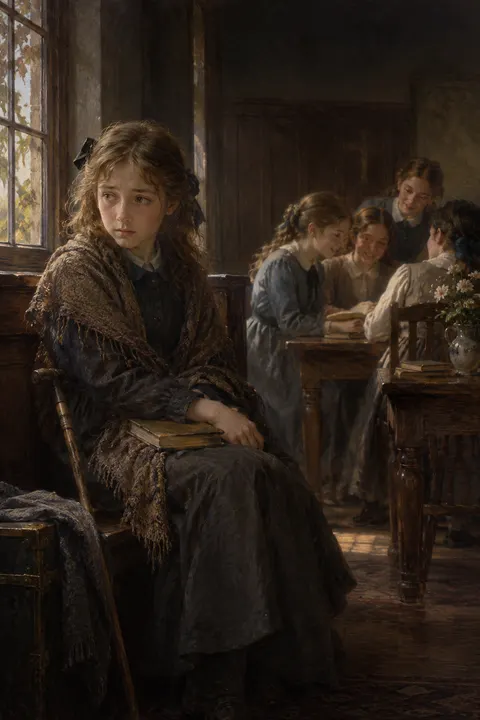
 Claribel or, Rest at lastLucy Ellen Guernsey
OmniClassics · Literature
Claribel or, Rest at last
Lucy Ellen GuernseyA new pupil expects cruelty at school and finds that accepting kindness can be its own difficult lesson.
Progress is saved in this browser
About the book
Claribel Woodworth arrives at the Hausen school carrying grief, painful memories of ridicule, and suspicion of other girls' intentions. Her physical disability has made her the object of both unhelpful indulgence and deliberate taunting, so even a friendly welcome seems capable of concealing an insult. Readers hear her schoolfellows' generous plans before seeing how differently she interprets them. Friendship, lessons, small responsibilities, and Christian instruction gradually become tests of trust and conduct. Guernsey places the story within the moral world of Sunday-school fiction, where spiritual growth is expressed through everyday service. Its treatment of disability reflects that period's assumptions, while the narrative's immediate interest lies in the gap between what people intend and what an injured, defensive person is able to hear.
- Trust and friendship
- Faith and conduct
- Misunderstanding and care
Why read it
The contrast between the girls' actual conversation and Claribel's fearful interpretation gives the moral lesson a concrete dramatic form.
English American Sunday-School Union text, copyright 1873; a Round Spring story