 Hesiod, the Homeric Hymns, and HomericaHesiod
OmniClassics · Literature
Hesiod, the Homeric Hymns, and Homerica
HesiodEarly Greek poetry gathers divine origins, practical instruction, hymns, and fragments of a wider heroic tradition.
Progress is saved in this browser
About the book
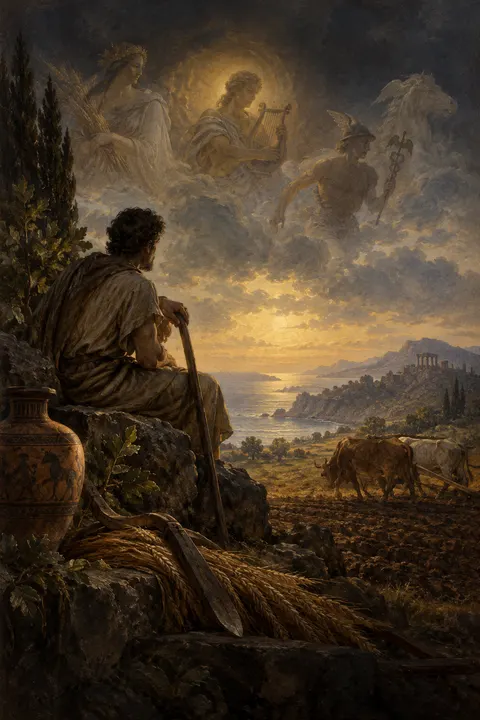
This collection brings Hesiod's Works and Days and Theogony together with other Hesiodic material, the Homeric Hymns, and texts or fragments associated with early Greek epic. Advice about labour and justice sits beside accounts of divine generations and narratives honouring individual gods. The hymns give figures such as Demeter, Apollo, and Hermes distinct stories, while the fragmentary material offers glimpses of traditions that do not survive as continuous works. Introduction and notes help orient readers within that variety. The volume should be approached as a gathering of different poems and witnesses, rather than as a single work by one author. Its range makes visible how questions of daily conduct, ritual honour, genealogy, and heroic memory could share the resources of an inherited poetic language.
- Divine order
- Labour and justice
- Mythic tradition
Why read it
For a broad view of early Greek poetic traditions that places practical counsel beside divine narrative and surviving epic fragments.
Poems and fragments · English translation associated with Hugh G. Evelyn-White
Contents and reading sections
- Section 1
- Section 2
- Section 3
- Section 4
- Section 5
- Section 6
- Section 7
- Section 8
- Section 9
- Section 10
- Section 11
- Section 12
- Section 13
- Section 14
- Section 15
- Section 16
- Section 17
- Section 18
- Section 19
- Section 20
- Section 21
- Section 22
- Section 23
- Section 24
- Section 25
- Section 26
- Section 27
- Section 28
- Section 29
- Section 30
- Section 31
- Section 32
- Section 33
- Section 34
- Section 35
- Section 36
- Section 37
- Section 38
- Section 39
- Section 40
- Section 41
- Section 42
- Section 43
- Section 44