 The IliadHomer
OmniClassics · Literature
The Iliad
HomerA warrior's anger exposes the fragile ties that hold an army and a world together.
Progress is saved in this browser
About the book
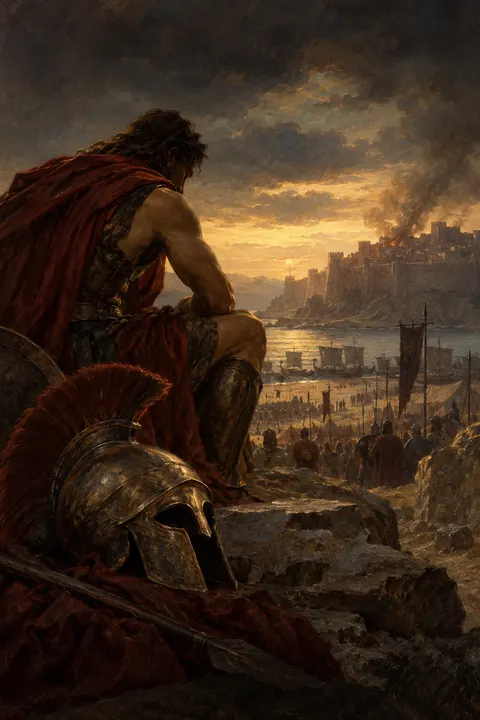
The Greek siege of Troy has already lasted years when a quarrel between Achilles and Agamemnon threatens the army from within. The epic follows the consequences of wounded honour through battles, councils, appeals, and encounters between enemies who share an awareness of mortality. Divine interventions enlarge the conflict without making human loss less immediate. Individual fighters enter the narrative with names, histories, and families, interrupting the apparent anonymity of war. The poem also turns towards the city under siege, where Hector's responsibilities connect public duty to intimate attachment. In Alexander Pope's English verse, sustained rhetorical energy carries arguments and combat alike. Readers encounter a story concerned not simply with victory, but with the costs of anger and the difficult recognition of another person's suffering.
- Anger and honour
- War and mortality
- Human recognition
Why read it
For an epic that places the splendour of martial language beside the particular lives that warfare endangers.
Alexander Pope verse translation · English text
Contents and reading sections
- Section 1
- Section 2
- Section 3
- Section 4
- Section 5
- Section 6
- Section 7
- Section 8
- Section 9
- Section 10
- Section 11
- Section 12
- Section 13
- Section 14
- Section 15
- Section 16
- Section 17
- Section 18
- Section 19
- Section 20
- Section 21
- Section 22
- Section 23
- Section 24
- Section 25
- Section 26
- Section 27
- Section 28
- Section 29
- Section 30
- Section 31
- Section 32
- Section 33
- Section 34
- Section 35
- Section 36
- Section 37
- Section 38
- Section 39
- Section 40
- Section 41
- Section 42
- Section 43
- Section 44
- Section 45
- Section 46
- Section 47
- Section 48
- Section 49
- Section 50
- Section 51
- Section 52
- Section 53
- Section 54
- Section 55
- Section 56
- Section 57
- Section 58
- Section 59
- Section 60
- Section 61
- Section 62
- Section 63
- Section 64
- Section 65
- Section 66
- Section 67
- Section 68
- Section 69
- Section 70
- Section 71
- Section 72
- Section 73
- Section 74
- Section 75
- Section 76
- Section 77
- Section 78
- Section 79
- Section 80
- Section 81
- Section 82
- Section 83
- Section 84
- Section 85
- Section 86
- Section 87
- Section 88
- Section 89
- Section 90
- Section 91
- Section 92
- Section 93
- Section 94