 KimRudyard Kipling
OmniClassics · Literature
Kim
Rudyard KiplingA resourceful boy travels through India between a spiritual quest and the competing purposes of imperial intelligence.
Progress is saved in this browser
About the book
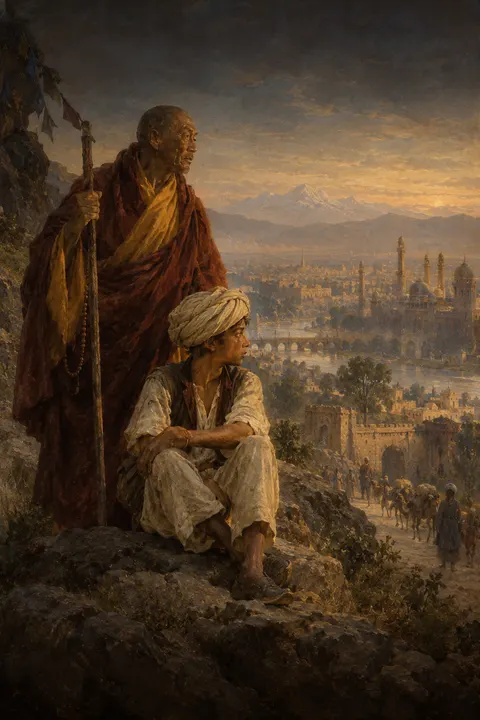
Kim, an orphan growing up in Lahore, becomes the companion of a Tibetan lama searching for a sacred river. Their travels draw on Kim's facility with languages, disguises, and the social codes of the people they meet. Those same abilities attract the attention of men engaged in the Great Game, giving his education another purpose and placing competing demands on his loyalty. Kipling fills the roads, trains, and resting places with conversation and sharply observed encounters. The affectionate relationship between boy and lama gives the novel a centre that does not simply coincide with its political intrigue. Its pleasures of movement and resourcefulness are inseparable from a colonial perspective, making Kim's uncertain place among different communities part of the question the narrative continually returns to.
- Identity and belonging
- Discipleship
- Empire and intrigue
Why read it
For a vivid journey whose central friendship gives spiritual searching and political adventure distinct but intertwined claims on its young traveller.
Novel · English text
Contents and reading sections
- Section 1
- Section 2
- Section 3
- Section 4
- Section 5
- Section 6
- Section 7
- Section 8
- Section 9
- Section 10
- Section 11
- Section 12
- Section 13
- Section 14
- Section 15
- Section 16
- Section 17
- Section 18
- Section 19
- Section 20
- Section 21
- Section 22
- Section 23
- Section 24
- Section 25
- Section 26
- Section 27
- Section 28
- Section 29
- Section 30
- Section 31
- Section 32
- Section 33
- Section 34
- Section 35
- Section 36
- Section 37
- Section 38
- Section 39
- Section 40
- Section 41
- Section 42
- Section 43
- Section 44
- Section 45
- Section 46
- Section 47
- Section 48
- Section 49
- Section 50