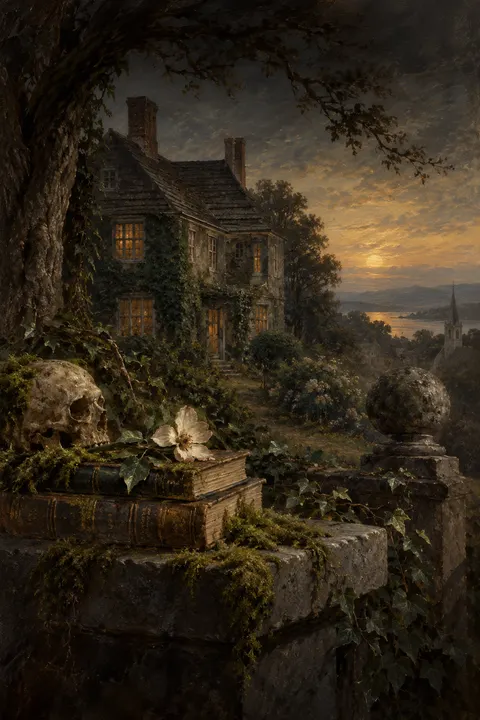
 Mosses from an old manseNathaniel Hawthorne
OmniClassics · Literature
Mosses from an old manse
Nathaniel HawthorneExperiments, secret journeys, and uncanny encounters expose the dangers within apparently elevated human purposes.
Progress is saved in this browser
About the book
Hawthorne opens with a reflective account of the old house and surroundings that give this collection its title, then moves through tales and sketches of very different kinds. In The Birthmark and Rappaccini's Daughter, attempts to control or perfect life become entangled with intimacy and mistrust. Young Goodman Brown turns a night journey into a disturbing problem of belief and interpretation. Other pieces use fantasy, allegory, satire, or observation to examine pride, guilt, artistic creation, and the wish to stand apart from ordinary humanity. Hawthorne's narrators often leave the reader uncertain how literally a strange event should be understood. That uncertainty gives moral judgment an additional difficulty: the desire to identify evil or impose an ideal may itself be part of what the story asks us to question.
- Perfection and control
- Guilt and suspicion
- Interpretation
Why read it
For a varied collection that repeatedly makes the wish to improve, judge, or master another life into a source of unease.
Tales and sketches · English text
Contents and reading sections
- Section 1
- Section 2
- Section 3
- Section 4
- Section 5
- Section 6
- Section 7
- Section 8
- Section 9
- Section 10
- Section 11
- Section 12
- Section 13
- Section 14
- Section 15
- Section 16
- Section 17
- Section 18
- Section 19
- Section 20
- Section 21
- Section 22
- Section 23
- Section 24
- Section 25
- Section 26
- Section 27
- Section 28
- Section 29
- Section 30
- Section 31
- Section 32
- Section 33
- Section 34
- Section 35
- Section 36
- Section 37
- Section 38
- Section 39
- Section 40
- Section 41
- Section 42
- Section 43
- Section 44
- Section 45
- Section 46
- Section 47
- Section 48
- Section 49
- Section 50
- Section 51
- Section 52
- Section 53
- Section 54
- Section 55
- Section 56
- Section 57
- Section 58
- Section 59
- Section 60
- Section 61
- Section 62
- Section 63
- Section 64
- Section 65
- Section 66
- Section 67
- Section 68
- Section 69
- Section 70
- Section 71
- Section 72
- Section 73
- Section 74
- Section 75
- Section 76
- Section 77