 SteppenwolfHermann Hesse
OmniClassics · Literature
Steppenwolf
Hermann HesseA solitary intellectual's account of his divided nature is challenged by encounters that unsettle his certainty about who he is.
Progress is saved in this browser
About the book
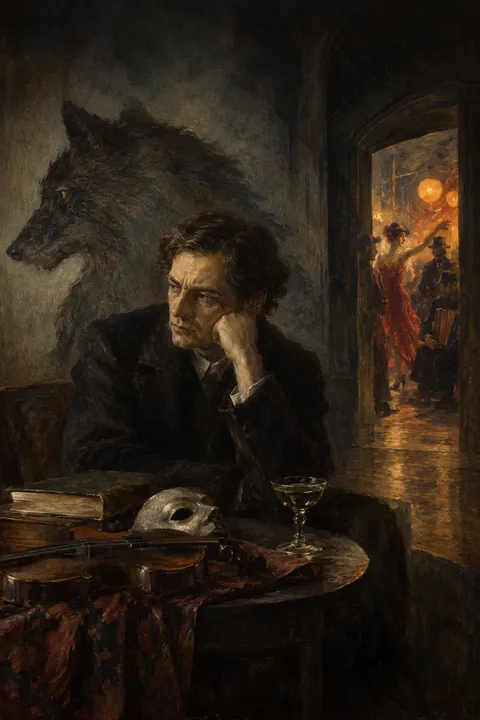
Harry Haller imagines himself as a creature split between cultivated humanity and an untamed wolf. His isolation, disgust with conventional society, and attraction to the comfort it offers make that self-description both powerful and unstable. Encounters with Hermine, Maria, and Pablo draw him towards pleasures and forms of companionship he has resisted. A mysterious treatise and the Magic Theatre push the book beyond ordinary confession into an exploration of competing selves. Hesse makes music, humour, and performance alternatives to the rigid divisions through which Harry explains his suffering. The novel does not offer a simple celebration of being an outsider. It asks what possibilities become visible when a person stops treating one tragic account of himself as the only available truth.
- Divided identity
- Isolation
- Art and transformation
Why read it
For an unsettling exploration of identity that subjects its own romantic image of the suffering outsider to sustained pressure.
English translation by Basil Creighton
Contents and reading sections
- Section 1
- Section 2
- Section 3
- Section 4
- Section 5
- Section 6
- Section 7
- Section 8
- Section 9
- Section 10
- Section 11
- Section 12
- Section 13
- Section 14
- Section 15
- Section 16
- Section 17
- Section 18
- Section 19
- Section 20
- Section 21
- Section 22
- Section 23
- Section 24
- Section 25
- Section 26
- Section 27
- Section 28
- Section 29
- Section 30
- Section 31
- Section 32
- Section 33
- Section 34
- Section 35