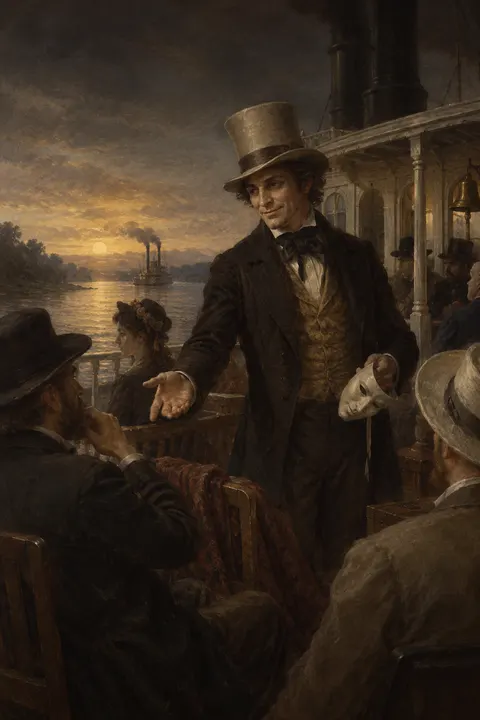
 The Confidence-Man: His MasqueradeHerman Melville
OmniClassics · Literature
The Confidence-Man: His Masquerade
Herman MelvillePassengers aboard a Mississippi steamboat encounter a succession of appeals that make trust itself the object of a continuing contest.
Progress is saved in this browser
About the book
On an April day aboard the Fidèle, strangers ask one another for confidence in charities, investments, remedies, stories, and human nature. Each encounter alters the meaning of trust: generosity may be admirable or foolish, suspicion prudent or cruel, and a persuasive appearance may conceal another performance. Melville gives the novel much of its movement through conversation rather than a conventional adventure plot. The reader is repeatedly asked to judge speakers without receiving a secure position outside their uncertainty. Satire reaches commerce, religion, optimism, and the literary desire for consistent characters. The book's masquerade is therefore also an experiment in reading, exposing how readily an interpretation depends on the very assurances that another scene may teach us to distrust.
- Trust and suspicion
- Identity as performance
- Commerce and belief
Why read it
For a searching comic experiment that turns the ordinary act of believing another person's story into a philosophical problem.
Novel · English text
Contents and reading sections
- Section 1
- Section 2
- Section 3
- Section 4
- Section 5
- Section 6
- Section 7
- Section 8
- Section 9
- Section 10
- Section 11
- Section 12
- Section 13
- Section 14
- Section 15
- Section 16
- Section 17
- Section 18
- Section 19
- Section 20
- Section 21
- Section 22
- Section 23
- Section 24
- Section 25
- Section 26
- Section 27
- Section 28
- Section 29
- Section 30
- Section 31
- Section 32
- Section 33
- Section 34
- Section 35
- Section 36
- Section 37
- Section 38
- Section 39
- Section 40
- Section 41
- Section 42
- Section 43
- Section 44
- Section 45
- Section 46
- Section 47