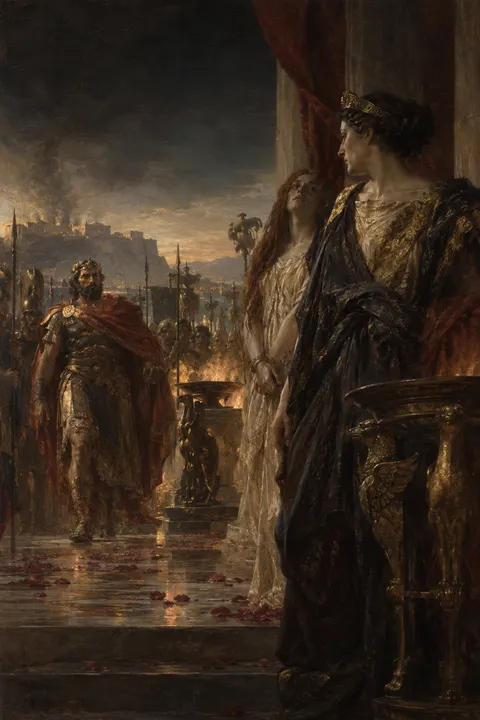
 The Agamemnon of AeschylusAeschylus
OmniClassics · Literature
The Agamemnon of Aeschylus
AeschylusA victorious king's return brings the unresolved costs of war back inside his household.
Progress is saved in this browser
About the book
A watchman waits for news that Troy has fallen, and the expected return of Agamemnon gives Argos an occasion for celebration shadowed by unease. Clytemnestra's command of the household and the chorus's memories keep earlier sacrifices present beneath the language of victory. When the king arrives with the captive prophet Cassandra, public triumph encounters knowledge and suffering that cannot be contained by its official account. Aeschylus builds the drama through ominous images, disputed interpretations, and speeches whose meanings exceed what their hearers can safely acknowledge. This first play of the Oresteia makes homecoming a confrontation with obligations left unsettled. It asks how a claim to justice can emerge from violence while preparing the conditions for further violence, binding the history of a family to the authority of its rulers.
- War and homecoming
- Justice and vengeance
- Inherited violence
Why read it
For a densely patterned tragedy in which the language of welcome carries the weight of a household's concealed history.
English rhyming verse translation by Gilbert Murray