 The Moon and SixpenceW. Somerset Maugham
OmniClassics · Literature
The Moon and Sixpence
W. Somerset MaughamAn apparently ordinary man's abandonment of family life leads a narrator to investigate an uncompromising artistic obsession.
Progress is saved in this browser
About the book
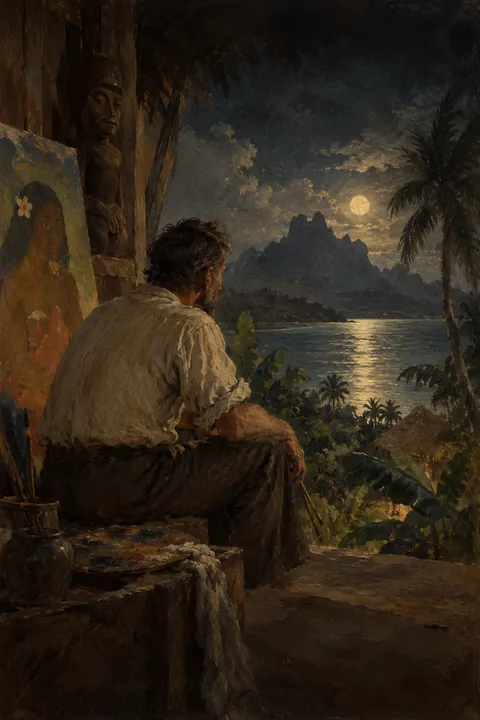
Charles Strickland leaves his established London household for Paris, where explanations based on a conventional romantic scandal prove inadequate. The narrator encounters a man driven to paint and strikingly indifferent to the comfort, affection, or approval of others. Attempts to understand him involve direct observation and accounts from people affected by his conduct, eventually extending the inquiry to Tahiti. Maugham makes the distance between artistic achievement and ordinary moral expectations central to the story. The narrator's curiosity does not remove the damage done to those who enter Strickland's orbit, and admiration remains entangled with repulsion. Rather than providing transparent access to the artist's inner life, the novel builds a portrait from incomplete encounters, asking what can be understood about a vocation whose demands its subject scarcely tries to explain.
- Artistic obsession
- Moral responsibility
- The limits of understanding
Why read it
For a provocative portrait of artistic compulsion constructed through the uncertain knowledge and conflicting responses of an observer.
Novel · English text
Contents and reading sections
- Section 1
- Section 2
- Section 3
- Section 4
- Section 5
- Section 6
- Section 7
- Section 8
- Section 9
- Section 10
- Section 11
- Section 12
- Section 13
- Section 14
- Section 15
- Section 16
- Section 17
- Section 18
- Section 19
- Section 20
- Section 21
- Section 22
- Section 23
- Section 24
- Section 25
- Section 26
- Section 27
- Section 28
- Section 29
- Section 30
- Section 31
- Section 32
- Section 33
- Section 34
- Section 35