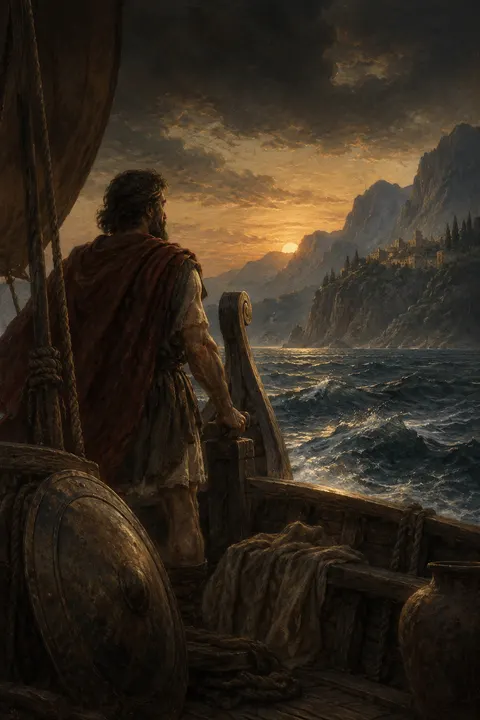
 The OdysseyHomer
OmniClassics · Literature
The Odyssey
HomerA long-delayed homecoming depends on recognizing friends, strangers, and oneself.
Progress is saved in this browser
About the book
Odysseus has survived the Trojan War but remains far from Ithaca, where his household faces the growing demands of men seeking to marry Penelope. His son Telemachus begins searching for news while the absent traveller negotiates unfamiliar hosts, dangerous temptations, and the consequences of earlier choices. The epic alternates journeys with remembered adventures, making storytelling itself one of Odysseus's most important abilities. Hospitality can offer protection or conceal a trap, and recognition rarely follows directly from appearance. Alongside its monsters and divine interventions, the work gives sustained attention to meals, beds, clothes, labour, and the relationships that make a home. This English prose rendering invites readers to follow both the adventure and the difficult work of returning to a life changed by absence.
- Homecoming
- Hospitality
- Identity and recognition
Why read it
For an adventure whose most intricate challenges concern trust, storytelling, and the meaning of home.
English prose translation
Contents and reading sections
- Section 1
- Section 2
- Section 3
- Section 4
- Section 5
- Section 6
- Section 7
- Section 8
- Section 9
- Section 10
- Section 11
- Section 12
- Section 13
- Section 14
- Section 15
- Section 16
- Section 17
- Section 18
- Section 19
- Section 20
- Section 21
- Section 22
- Section 23
- Section 24
- Section 25
- Section 26
- Section 27
- Section 28
- Section 29
- Section 30
- Section 31
- Section 32
- Section 33
- Section 34
- Section 35
- Section 36
- Section 37
- Section 38
- Section 39
- Section 40
- Section 41
- Section 42
- Section 43
- Section 44
- Section 45
- Section 46
- Section 47
- Section 48
- Section 49
- Section 50
- Section 51
- Section 52
- Section 53
- Section 54
- Section 55
- Section 56
- Section 57
- Section 58