 The Scarlet LetterNathaniel Hawthorne
OmniClassics · Literature
The Scarlet Letter
Nathaniel HawthorneA publicly imposed symbol cannot contain the private lives it is meant to explain.
Progress is saved in this browser
About the book
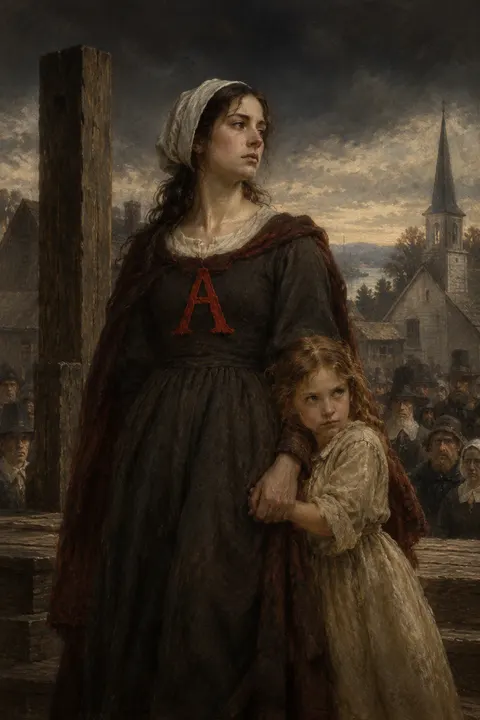
Hester Prynne is required to wear a scarlet letter after bearing a child outside marriage in a Puritan New England settlement. The visible punishment makes her an object of public judgment while leaving important relationships concealed. Hawthorne follows the differing burdens of exposure, secrecy, and resentment among people bound to her story. Pearl, Hester's child, repeatedly unsettles the meanings adults attempt to assign to what they see. The narrative moves between social observation, psychological inquiry, and symbols that refuse a single interpretation. Its historical setting gives collective authority a powerful presence without allowing the community's verdict to settle the questions before the reader. The novel asks how an identity imposed from outside can change through experience, and what hidden guilt may demand from those who escape public shame.
- Public judgment
- Secrecy and guilt
- Identity
Why read it
For the complex relation between an unforgettable symbol and the lives that continually exceed its official meaning.
English text
Contents and reading sections
- Section 1
- Section 2
- Section 3
- Section 4
- Section 5
- Section 6
- Section 7
- Section 8
- Section 9
- Section 10
- Section 11
- Section 12
- Section 13
- Section 14
- Section 15
- Section 16
- Section 17
- Section 18
- Section 19
- Section 20
- Section 21
- Section 22
- Section 23
- Section 24
- Section 25
- Section 26
- Section 27
- Section 28
- Section 29
- Section 30
- Section 31
- Section 32
- Section 33
- Section 34
- Section 35
- Section 36
- Section 37
- Section 38
- Section 39
- Section 40
- Section 41
- Section 42