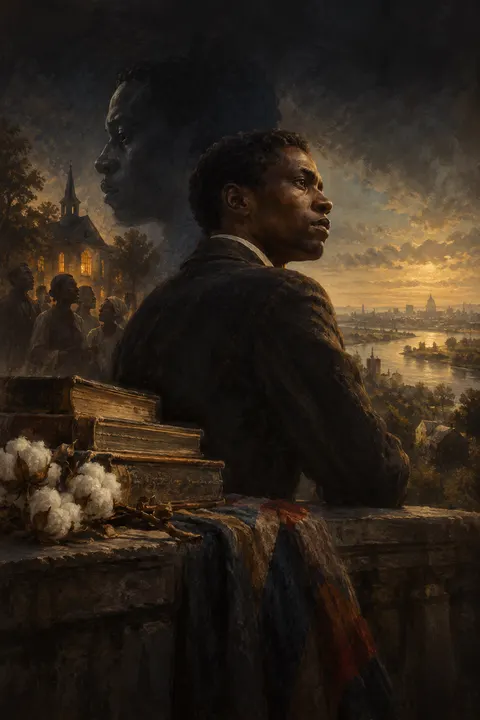
 The Souls of Black FolkW. E. B. Du Bois
OmniClassics · Literature
The Souls of Black Folk
W. E. B. Du BoisEssays, history, and personal witness examine Black life after emancipation.
Progress is saved in this browser
About the book
Du Bois brings several forms of writing together to consider the conditions of Black life in the United States at the beginning of the twentieth century. Historical argument, social observation, autobiography, and imaginative narrative address education, labour, religion, political leadership, and the enduring effects of racial exclusion. The idea of double consciousness gives language to the strain of living within a society that denies full recognition. Individual scenes make broad arguments tangible, while the book's attention to spirituals connects cultural expression with collective memory. Its chapters invite reading both separately and in relation to one another. The result is a work concerned with material opportunity and with the authority to describe an inward life that dominant public accounts have failed to understand.
- Racial exclusion
- Education and opportunity
- Identity and cultural memory
Why read it
For the range of forms through which Du Bois joins public argument to lived and inward experience.
English text
Contents and reading sections
- Section 1
- Section 2
- Section 3
- Section 4
- Section 5
- Section 6
- Section 7
- Section 8
- Section 9
- Section 10
- Section 11
- Section 12
- Section 13
- Section 14
- Section 15
- Section 16
- Section 17
- Section 18
- Section 19
- Section 20
- Section 21
- Section 22
- Section 23
- Section 24
- Section 25
- Section 26
- Section 27
- Section 28
- Section 29
- Section 30
- Section 31
- Section 32
- Section 33
- Section 34