 Up from Slavery: An AutobiographyBooker T. Washington
OmniClassics · Literature
Up from Slavery: An Autobiography
Booker T. WashingtonA personal history of education becomes an argument about building opportunity after slavery.
Progress is saved in this browser
About the book
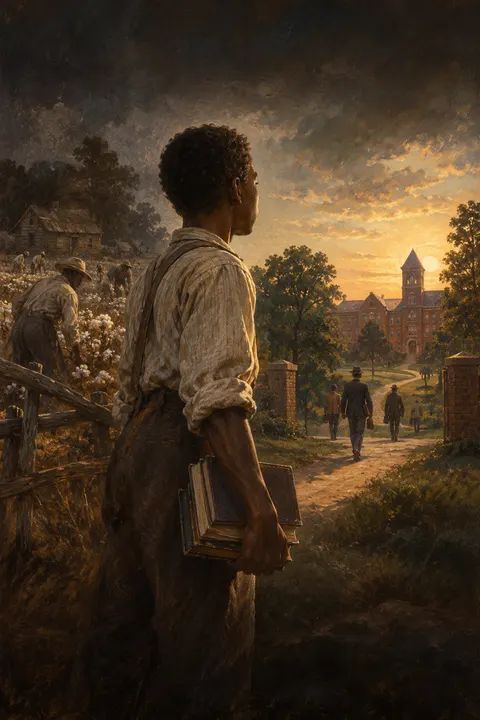
Booker T. Washington recounts his childhood under slavery, his efforts to obtain an education, and the work of developing Tuskegee as an institution. The narrative places practical skills, labour, discipline, and financial support at the centre of educational advancement. Anecdotes about students, teachers, donors, and public speaking show how he understood the relationship between individual habits and collective possibility. Washington also uses the story of his life to present a position on racial progress in the United States, making autobiography a vehicle for public persuasion. Readers can attend both to the concrete difficulties of institution building and to the assumptions behind his chosen strategy. The book offers an influential account of work and education whose arguments gain further depth when placed beside other Black writers' responses.
- Education
- Institution building
- Racial advancement
Why read it
For a firsthand account of creating an educational institution and the public philosophy used to support it.
English text
Contents and reading sections
- Section 1
- Section 2
- Section 3
- Section 4
- Section 5
- Section 6
- Section 7
- Section 8
- Section 9
- Section 10
- Section 11
- Section 12
- Section 13
- Section 14
- Section 15
- Section 16
- Section 17
- Section 18
- Section 19
- Section 20
- Section 21
- Section 22
- Section 23
- Section 24
- Section 25
- Section 26
- Section 27
- Section 28
- Section 29
- Section 30
- Section 31
- Section 32
- Section 33
- Section 34
- Section 35
- Section 36