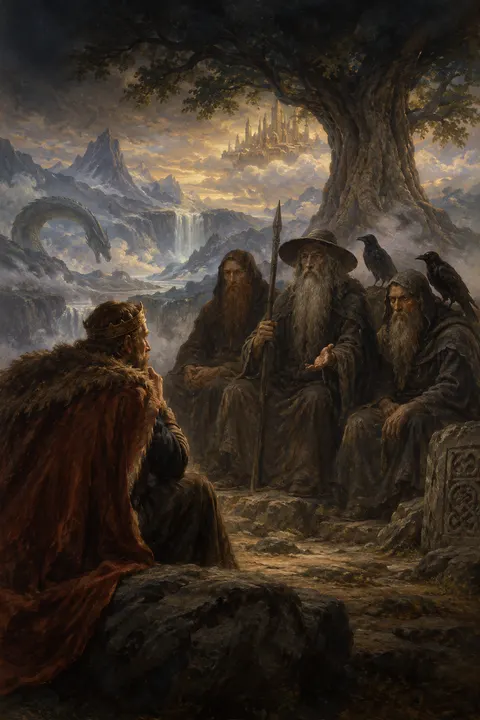
 The Younger Edda; Also called Snorre's Edda, or The Prose EddaSnorri Sturluson
OmniClassics · Literature
The Younger Edda; Also called Snorre's Edda, or The Prose Edda
Snorri SturlusonNorse myths become both stories of the gods and a guide to the language of poetry.
Progress is saved in this browser
About the book
This English selection from Snorri's Prose Edda introduces a mythic world through framed conversations and explanations of traditional poetic expression. Gylfi's questioning leads into accounts of the gods, the making of the world, and the dangers that threaten its order. Other sections explain names, images, and inherited stories that a poet needs in order to understand or compose elaborate allusions. Humor, violence, ingenuity, and foreboding coexist throughout these narratives. Rasmus B. Anderson's version includes the foreword, The Fooling of Gylfe, Brage's Talk, associated afterwords, and selected passages on poetical diction, with explanatory apparatus. Its scope therefore differs from an unabridged translation of every part of the Prose Edda, while offering a substantial introduction to its narrative and poetic purposes.
- Myth and cosmic order
- Poetic language
- Knowledge and storytelling
Why read it
The combination of myths and explanations shows how traditional stories furnish a poet's working vocabulary.
English selection by Rasmus B. Anderson, 1901 edition
Contents and reading sections
- Section 1
- Section 2
- Section 3
- Section 4
- Section 5
- Section 6
- Section 7
- Section 8
- Section 9
- Section 10
- Section 11
- Section 12
- Section 13
- Section 14
- Section 15
- Section 16
- Section 17
- Section 18
- Section 19
- Section 20
- Section 21
- Section 22
- Section 23
- Section 24
- Section 25
- Section 26
- Section 27
- Section 28
- Section 29
- Section 30
- Section 31
- Section 32
- Section 33