 TheaetetusPlato
OmniClassics · Literature
Theaetetus
PlatoA young mathematician's answers make the apparently simple question of knowledge increasingly difficult.
Progress is saved in this browser
About the book
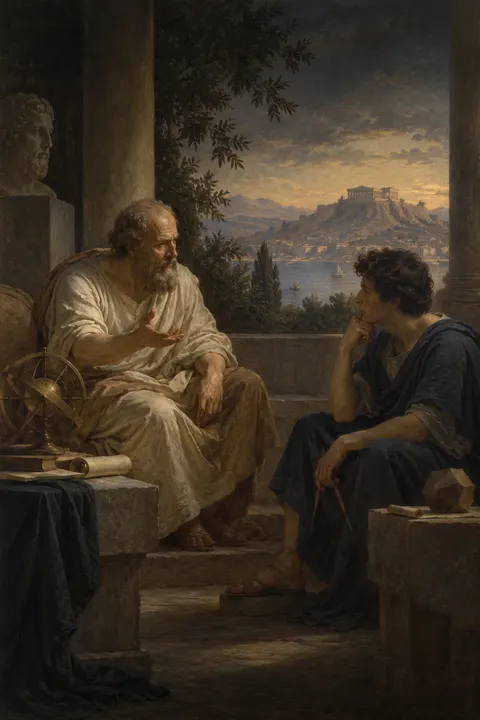
Socrates meets Theaetetus and encourages him to say what knowledge is, rather than merely naming different subjects that people know. Their investigation tests accounts involving perception, true judgment, and the possibility of adding an explanation to a correct belief. Images of mental activity help make the problems vivid, but each proposed model introduces difficulties of its own. Socrates describes his role through the analogy of midwifery, presenting inquiry as assistance in bringing thoughts forward and testing their worth. The conversation is interested in error as much as success: an adequate account of knowing must also explain how mistakes can occur. Plato makes the young participant's willingness to reconsider part of the philosophical drama, allowing an unresolved question to become evidence of intellectual work rather than a reason to abandon it.
- Knowledge
- Perception and error
- Inquiry
Why read it
For a patient examination of what knowing might require, conducted through successive proposals whose failures become philosophically productive.
English translation by Benjamin Jowett
Contents and reading sections
- Section 1
- Section 2
- Section 3
- Section 4
- Section 5
- Section 6
- Section 7
- Section 8
- Section 9
- Section 10
- Section 11
- Section 12
- Section 13
- Section 14
- Section 15
- Section 16
- Section 17
- Section 18
- Section 19
- Section 20
- Section 21
- Section 22
- Section 23
- Section 24
- Section 25
- Section 26
- Section 27
- Section 28
- Section 29
- Section 30
- Section 31
- Section 32