 MenoPlato
OmniClassics · Literature
Meno
PlatoA question about teaching virtue becomes an inquiry into how anyone can search for what they do not yet know.
Progress is saved in this browser
About the book
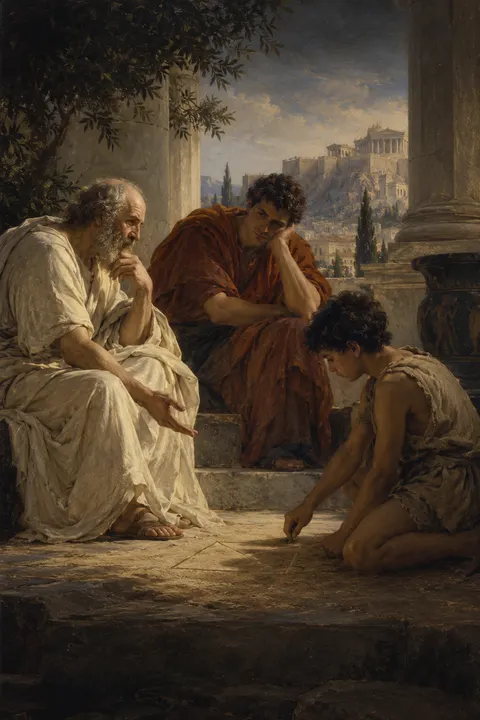
Meno asks Socrates whether virtue can be taught, only to find that agreement about the meaning of virtue must come first. Attempts at definition lead to a deeper difficulty: how can someone investigate an unknown object, or recognise an answer when it appears? Socrates responds through a discussion of recollection and a geometrical exchange with an enslaved boy in Meno's household. The dialogue later returns to the relation between knowledge, correct opinion, and successful conduct. Its changes of direction keep practical education tied to questions about inquiry itself. Meno's impatience and Socrates's persistence give the argument a human rhythm, showing how the demand for a quick conclusion can interfere with examining the assumptions that would make a conclusion useful.
- Learning
- Virtue
- Knowledge and opinion
Why read it
For a compact dialogue that turns a familiar educational question into a challenge about the very possibility of inquiry.
English translation by Benjamin Jowett