 Unnatural deathDorothy L. Sayers
OmniClassics · Literature
Unnatural death
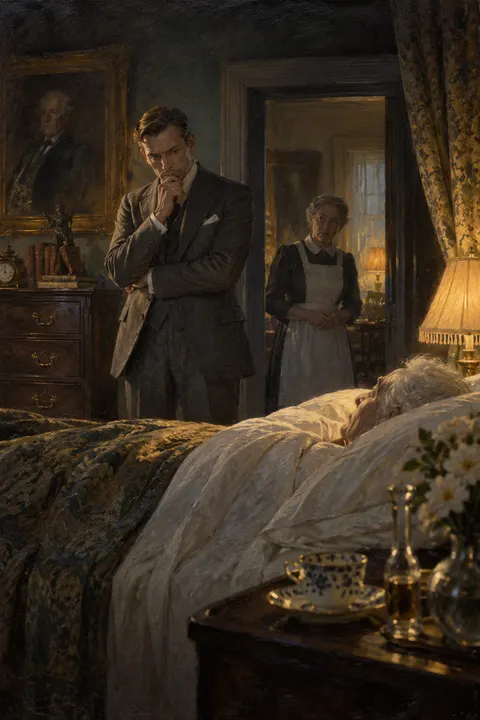
Dorothy L. SayersAn apparently ordinary death leaves a doctor uneasy and a detective unwilling to dismiss the doubt.
Progress is saved in this browser
About the book
Lord Peter Wimsey hears about the death of an elderly patient whose illness makes suspicion seem unnecessary. A doctor's unresolved concern nevertheless prompts him to investigate, drawing Miss Climpson's skill at social observation into the case. Sayers makes conversation, family connections, and apparently unremarkable routines important sources of evidence. The inquiry raises an uncomfortable question about intervention: looking into a hidden crime may place other people at risk before it produces proof. The book's interest extends beyond an ingenious method to the pressures of inheritance and the forms of dependence within respectable households. Wimsey's wit remains present, but the consequences of his curiosity give it a darker setting. Readers must follow a suspicion whose moral urgency grows faster than its official credibility.
- Suspicion
- Inheritance
- Responsibility of investigation
Why read it
For the productive contrast between Wimsey's reasoning and Miss Climpson's ability to gather knowledge through ordinary company.
English text
Contents and reading sections
- Section 1
- Section 2
- Section 3
- Section 4
- Section 5
- Section 6
- Section 7
- Section 8
- Section 9
- Section 10
- Section 11
- Section 12
- Section 13
- Section 14
- Section 15
- Section 16
- Section 17
- Section 18
- Section 19
- Section 20
- Section 21
- Section 22
- Section 23
- Section 24
- Section 25
- Section 26
- Section 27
- Section 28
- Section 29
- Section 30
- Section 31
- Section 32
- Section 33
- Section 34
- Section 35
- Section 36
- Section 37
- Section 38
- Section 39
- Section 40
- Section 41