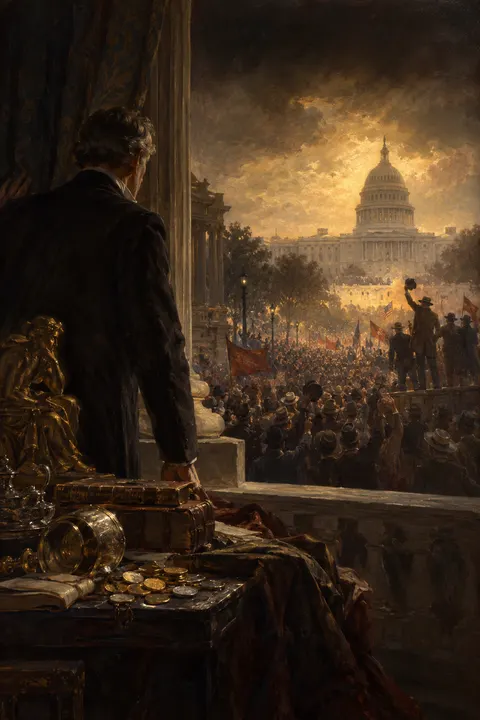
 1900; or, The last PresidentIngersoll Lockwood
OmniClassics · Literature
1900; or, The last President
Ingersoll LockwoodAn imagined victory for William Jennings Bryan unleashes a partisan nightmare of national disorder.
Progress is saved in this browser
About the book
Ingersoll Lockwood's political fiction begins with the announcement that Bryan has won the presidential election of 1896. New York's prosperous households fear the crowds gathering outside, while supporters elsewhere celebrate the promise of relief from creditors and economic inequality. The narrative follows the imagined consequences of that victory through public panic, financial upheaval, and struggles over the direction of government. Gold, silver, taxation, and class resentment supply the machinery of its alarm. Lockwood writes from a strongly hostile view of the political forces he depicts, so the book's claims belong to its campaign-era polemic rather than to neutral historical explanation. Read in that setting, the short novel shows how an election could be dramatized as a threat to the continued existence of the republic.
- Political fear
- Class and money
- Partisan speculation
Why read it
The imagined crisis preserves the intensity and imagery of a specific political conflict.
English text, copyright 1896