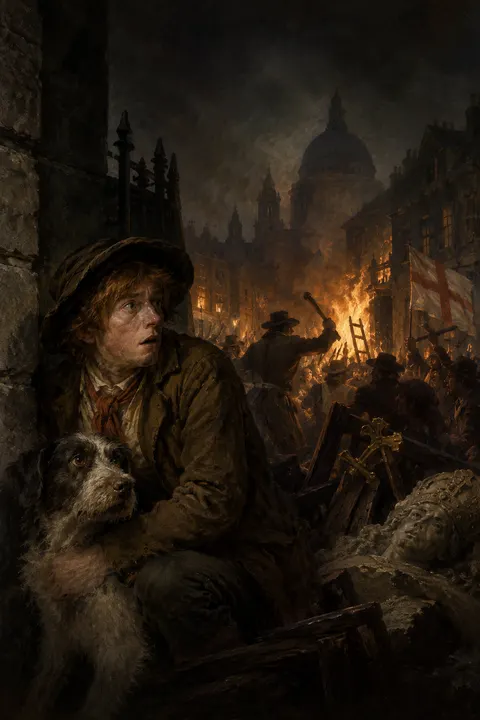
 Barnaby Rudge: A Tale of the Riots of 'EightyCharles Dickens
OmniClassics · Literature
Barnaby Rudge: A Tale of the Riots of 'Eighty
Charles DickensPrivate grievances enter a public riot whose violence soon exceeds the purposes of those encouraging it.
Progress is saved in this browser
About the book
An old murder shadows the households and relationships around the Maypole inn before the narrative moves towards London's anti-Catholic Gordon Riots of 1780. Barnaby Rudge and his mother belong to a network of loyalties, secrets, and pressures that becomes entangled with the gathering unrest. Dickens sets family conflict and romantic attachment alongside political agitation, showing how prejudice can offer an outlet for ambitions that are not themselves religious. The crowd's expanding power makes the difference between incitement and control increasingly visible. Comic figures and domestic scenes give the historical setting texture, while the mystery keeps earlier actions active within the present. The novel asks how people become participants in collective violence and what happens when a public cause supplies permission for private resentment, opportunism, or excitement.
- Mob violence
- Prejudice
- Private and public conflict
Why read it
For a historical Dickens novel that connects the energy of a riot with the smaller interests and injuries feeding it.
English text
Contents and reading sections
- Section 1
- Section 2
- Section 3
- Section 4
- Section 5
- Section 6
- Section 7
- Section 8
- Section 9
- Section 10
- Section 11
- Section 12
- Section 13
- Section 14
- Section 15
- Section 16
- Section 17
- Section 18
- Section 19
- Section 20
- Section 21
- Section 22
- Section 23
- Section 24
- Section 25
- Section 26
- Section 27
- Section 28
- Section 29
- Section 30
- Section 31
- Section 32
- Section 33
- Section 34
- Section 35
- Section 36
- Section 37
- Section 38
- Section 39
- Section 40
- Section 41
- Section 42
- Section 43
- Section 44
- Section 45
- Section 46
- Section 47
- Section 48
- Section 49
- Section 50
- Section 51
- Section 52
- Section 53
- Section 54
- Section 55
- Section 56
- Section 57
- Section 58
- Section 59
- Section 60
- Section 61
- Section 62
- Section 63
- Section 64
- Section 65
- Section 66
- Section 67
- Section 68
- Section 69
- Section 70
- Section 71
- Section 72
- Section 73
- Section 74
- Section 75
- Section 76
- Section 77
- Section 78
- Section 79
- Section 80
- Section 81
- Section 82
- Section 83
- Section 84
- Section 85
- Section 86
- Section 87
- Section 88
- Section 89
- Section 90
- Section 91
- Section 92
- Section 93
- Section 94
- Section 95
- Section 96
- Section 97
- Section 98
- Section 99
- Section 100
- Section 101
- Section 102
- Section 103
- Section 104
- Section 105
- Section 106
- Section 107
- Section 108
- Section 109
- Section 110
- Section 111
- Section 112
- Section 113
- Section 114
- Section 115
- Section 116
- Section 117
- Section 118
- Section 119
- Section 120
- Section 121