 Martin ChuzzlewitCharles Dickens
OmniClassics · Literature
Martin Chuzzlewit
Charles DickensA disputed family fortune exposes the many respectable forms that selfishness can take.
Progress is saved in this browser
About the book
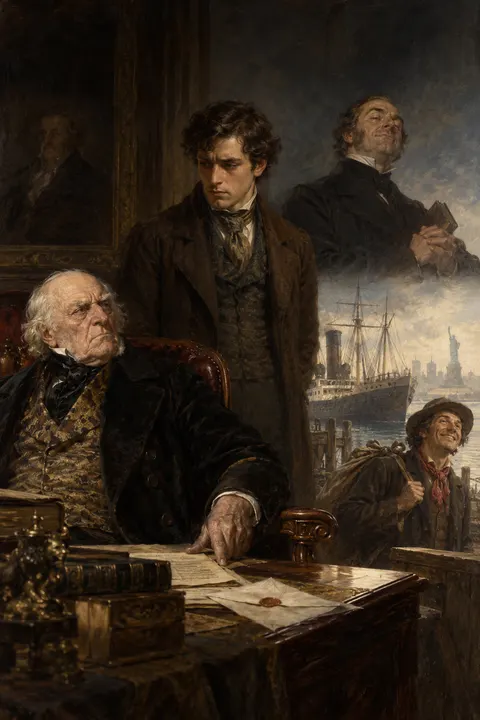
The Chuzzlewit family's relations are strained by money, inheritance, and incompatible expectations of gratitude. Young Martin's conflict with his grandfather takes him into experiences that challenge his confidence in what he deserves. Around them, Dickens places professional hypocrisy, family calculation, and forms of generosity that attract much less notice. The architect Pecksniff's moral language makes his self-interest particularly theatrical, while the narrative's American journey broadens the satire to commercial promises and public boasts of virtue. Mark Tapley's determined good humour offers a different response to hardship without erasing its seriousness. The novel asks how a person recognises selfishness when it appears under the flattering names of principle, independence, or family duty, and whether difficult experience can make recognition matter in subsequent conduct.
- Selfishness
- Hypocrisy
- Moral learning
Why read it
For Dickens's energetic exposure of self-interest expressed as virtue, across a family dispute and an illusory new beginning abroad.
English text
Contents and reading sections
- Section 1
- Section 2
- Section 3
- Section 4
- Section 5
- Section 6
- Section 7
- Section 8
- Section 9
- Section 10
- Section 11
- Section 12
- Section 13
- Section 14
- Section 15
- Section 16
- Section 17
- Section 18
- Section 19
- Section 20
- Section 21
- Section 22
- Section 23
- Section 24
- Section 25
- Section 26
- Section 27
- Section 28
- Section 29
- Section 30
- Section 31
- Section 32
- Section 33
- Section 34
- Section 35
- Section 36
- Section 37
- Section 38
- Section 39
- Section 40
- Section 41
- Section 42
- Section 43
- Section 44
- Section 45
- Section 46
- Section 47
- Section 48
- Section 49
- Section 50
- Section 51
- Section 52
- Section 53
- Section 54
- Section 55
- Section 56
- Section 57
- Section 58
- Section 59
- Section 60
- Section 61
- Section 62
- Section 63
- Section 64
- Section 65
- Section 66
- Section 67
- Section 68
- Section 69
- Section 70
- Section 71
- Section 72
- Section 73
- Section 74
- Section 75
- Section 76
- Section 77
- Section 78
- Section 79
- Section 80
- Section 81
- Section 82
- Section 83
- Section 84
- Section 85
- Section 86
- Section 87
- Section 88
- Section 89
- Section 90
- Section 91
- Section 92
- Section 93
- Section 94
- Section 95
- Section 96
- Section 97
- Section 98
- Section 99
- Section 100
- Section 101
- Section 102
- Section 103
- Section 104
- Section 105
- Section 106
- Section 107
- Section 108
- Section 109
- Section 110
- Section 111
- Section 112
- Section 113
- Section 114
- Section 115
- Section 116
- Section 117
- Section 118
- Section 119
- Section 120
- Section 121
- Section 122
- Section 123
- Section 124
- Section 125
- Section 126
- Section 127
- Section 128
- Section 129
- Section 130
- Section 131
- Section 132
- Section 133
- Section 134
- Section 135
- Section 136
- Section 137
- Section 138
- Section 139
- Section 140
- Section 141
- Section 142
- Section 143
- Section 144
- Section 145
- Section 146
- Section 147
- Section 148
- Section 149
- Section 150
- Section 151
- Section 152
- Section 153
- Section 154
- Section 155
- Section 156
- Section 157
- Section 158
- Section 159
- Section 160
- Section 161