 EuthyphroPlato
OmniClassics · Literature
Euthyphro
PlatoA confident claim to religious knowledge becomes difficult to sustain under questioning.
Progress is saved in this browser
About the book
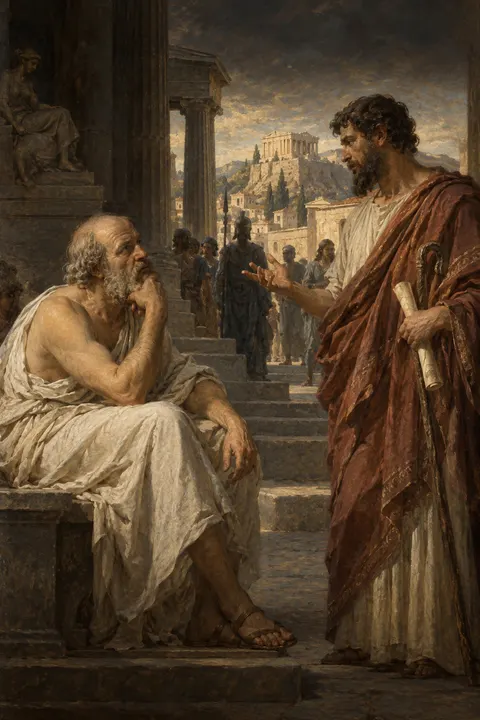
Socrates meets Euthyphro near the court, where each man has business connected with questions of religious duty. Euthyphro's confidence in the rightness of his own action prompts Socrates to ask what piety itself means. Proposed definitions invite further questions, revealing the difference between identifying an example and explaining the feature that makes it count as one. The short dialogue is especially clear about the pressure a request for reasons can place upon an apparently settled conviction. Its famous problem about divine approval emerges within that practical exchange rather than as an isolated puzzle. Plato lets the conversation expose difficulties without supplying an easy final formula, making the reader's continued examination part of the work left unfinished by the speakers.
- Religious duty
- Definition
- Knowledge and confidence
Why read it
For a concise example of questioning that turns an everyday claim of certainty into a demanding philosophical problem.
Benjamin Jowett translation · English text