 The RepublicPlato
OmniClassics · Literature
The Republic
PlatoA conversation about justice expands into a demanding picture of education, politics, and the soul.
Progress is saved in this browser
About the book
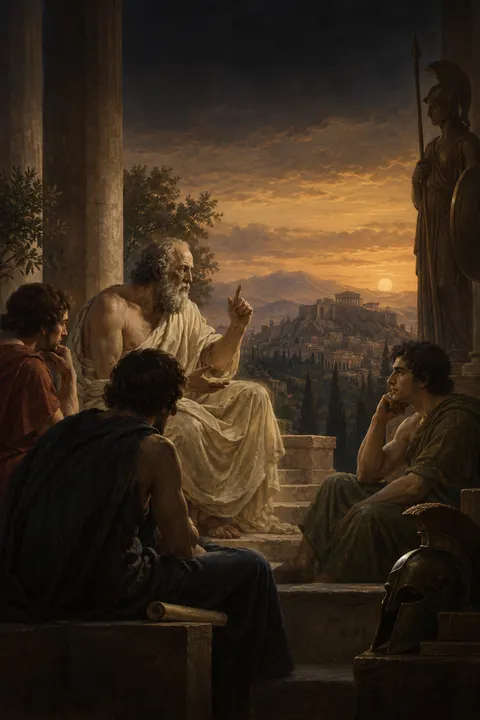
Socrates and his companions begin by asking what justice is and whether being just benefits the person who practises it. Their inquiry constructs an imagined city as a way of examining questions that also concern individual character. Plato connects political arrangements with education, desire, knowledge, and the images through which people understand reality. Familiar examples lead into proposals that can be illuminating, troubling, or both, making agreement something to test rather than assume. The dialogue's famous images belong to a sustained argument whose stages reward careful comparison. Benjamin Jowett's introduction and analysis accompany the translation. Readers can approach the work as an invitation to examine the relation between a society's institutions and the kinds of people those institutions encourage it to produce.
- Justice
- Education
- Knowledge and political power
Why read it
For a far-reaching argument that connects the question of a good life with the organisation of an entire society.
Benjamin Jowett translation · English text
Contents and reading sections
- Section 1
- Section 2
- Section 3
- Section 4
- Section 5
- Section 6
- Section 7
- Section 8
- Section 9
- Section 10
- Section 11
- Section 12
- Section 13
- Section 14
- Section 15
- Section 16
- Section 17
- Section 18
- Section 19
- Section 20
- Section 21
- Section 22
- Section 23
- Section 24
- Section 25
- Section 26
- Section 27
- Section 28
- Section 29
- Section 30
- Section 31
- Section 32
- Section 33
- Section 34
- Section 35
- Section 36
- Section 37
- Section 38
- Section 39
- Section 40
- Section 41
- Section 42
- Section 43
- Section 44
- Section 45
- Section 46
- Section 47
- Section 48
- Section 49
- Section 50
- Section 51
- Section 52
- Section 53
- Section 54
- Section 55
- Section 56
- Section 57
- Section 58
- Section 59
- Section 60
- Section 61
- Section 62
- Section 63
- Section 64
- Section 65
- Section 66
- Section 67
- Section 68
- Section 69
- Section 70
- Section 71
- Section 72
- Section 73
- Section 74
- Section 75
- Section 76
- Section 77
- Section 78
- Section 79
- Section 80
- Section 81
- Section 82
- Section 83
- Section 84
- Section 85
- Section 86
- Section 87
- Section 88
- Section 89
- Section 90
- Section 91
- Section 92
- Section 93
- Section 94
- Section 95
- Section 96
- Section 97
- Section 98
- Section 99
- Section 100
- Section 101
- Section 102