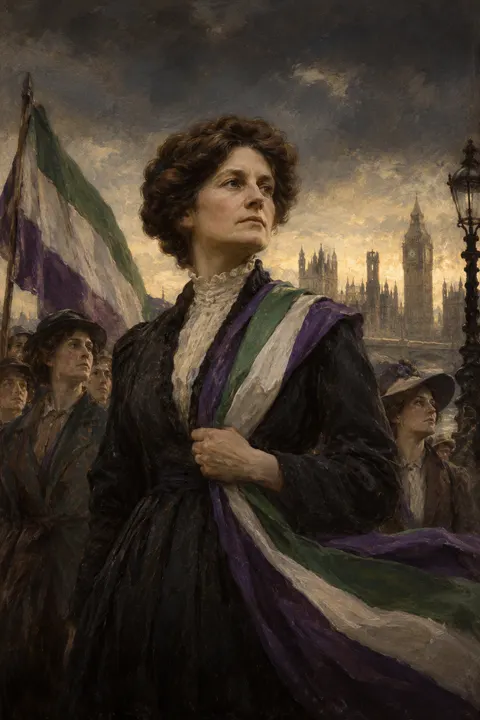
 My own storyEmmeline Pankhurst
OmniClassics · Literature
My own story
Emmeline PankhurstA suffrage leader explains how political frustration became militant action.
Progress is saved in this browser
About the book
Emmeline Pankhurst recounts the experiences and convictions behind her leadership of the British women's suffrage campaign. Beginning with childhood encounters with political injustice, she follows the formation of the Women's Social and Political Union and the escalating conflict between campaigners and government. Public meetings, arrests, imprisonment, hunger strikes, and forcible feeding become stages in her argument that conventional appeals had failed. Written from within that struggle, the book presents a participant's forceful defense of disputed methods rather than a detached history of the movement. Its 1914 perspective also matters: Pankhurst writes before the later extension of voting rights, with both the campaign's costs and its unfinished demands pressing upon her account.
- Women's suffrage
- Political resistance
- Prison and protest
Why read it
Read a central campaigner's own explanation of the choices and confrontations behind militant suffrage.
English text of the 1914 autobiography
Contents and reading sections
- Section 1
- Section 2
- Section 3
- Section 4
- Section 5
- Section 6
- Section 7
- Section 8
- Section 9
- Section 10
- Section 11
- Section 12
- Section 13
- Section 14
- Section 15
- Section 16
- Section 17
- Section 18
- Section 19
- Section 20
- Section 21
- Section 22
- Section 23
- Section 24
- Section 25
- Section 26
- Section 27
- Section 28
- Section 29
- Section 30
- Section 31
- Section 32
- Section 33
- Section 34
- Section 35
- Section 36
- Section 37
- Section 38
- Section 39
- Section 40
- Section 41
- Section 42
- Section 43
- Section 44
- Section 45
- Section 46
- Section 47