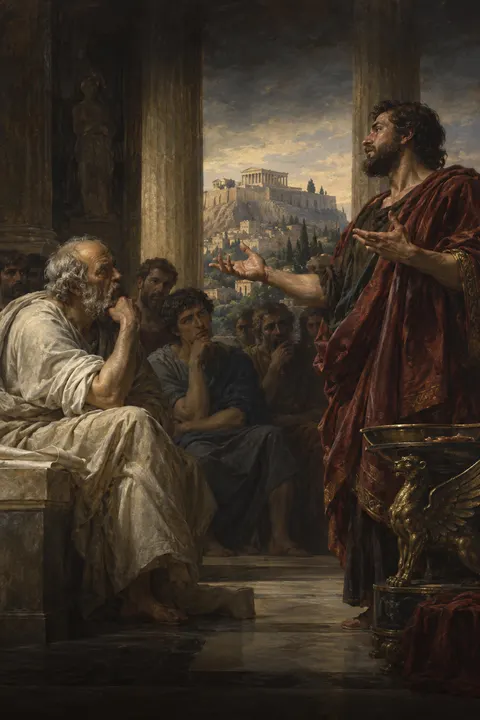
 GorgiasPlato
OmniClassics · Literature
Gorgias
PlatoA debate over eloquence becomes a dispute about power and the life worth choosing.
Progress is saved in this browser
About the book
Socrates questions Gorgias about rhetoric, asking what its practitioners know and what their skill enables them to achieve. As other speakers enter, the discussion moves towards justice, pleasure, punishment, and the attraction of being able to impose one's will. Plato makes disagreement increasingly personal, showing how an argument about technique can depend on incompatible accounts of a good life. The ability to persuade an audience is repeatedly distinguished from the ability to understand or improve what is being discussed. Strong objections prevent Socrates' position from becoming a comfortable series of maxims. Readers must follow both the reasoning and the pressures exerted by pride, impatience, and social ambition. The dialogue asks what power is worth if its possessor cannot explain the ends it serves.
- Persuasion
- Power and justice
- The good life
Why read it
For a vigorous confrontation between rhetorical success and the harder question of whether success makes a life better.
Benjamin Jowett translation · English text