 The slave shipMary Johnston
OmniClassics · Literature
The slave ship
Mary JohnstonA Scots survivor of Culloden confronts an Atlantic economy that turns personal freedom and human bondage into competing interests.
Progress is saved in this browser
About the book
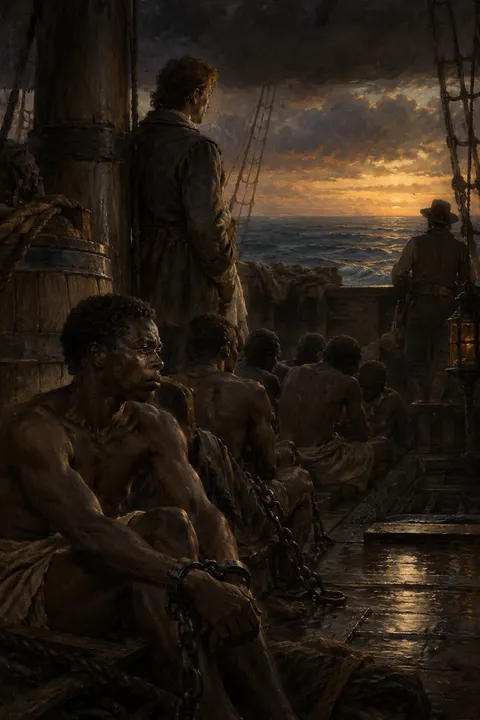
David Scott recalls the consequences of fighting for the Jacobite cause: imprisonment in Edinburgh, a failed escape, and transportation into forced service in Virginia. There he encounters people whose enslavement extends far beyond his own particular defeat. His subsequent passage aboard the Janet brings him into direct contact with the African slave trade and with men skilled at explaining away their participation in it. Johnston makes the narrator's temptation to accept comfort, opportunity, and professional excuses central to the story. Memory supplies a perspective from which earlier evasions can be recognized without making those evasions harmless. The historical adventure therefore asks how someone who has suffered the loss of liberty can still become entangled in a system that denies liberty to others.
- Bondage and complicity
- Self-interest and conscience
- Retrospective moral judgment
Why read it
Scott's changing position within the Atlantic world makes the difference between suffering injustice and recognizing one's participation in it unusually concrete.
Little, Brown, and Company edition, published November 1924
Contents and reading sections
- Section 1
- Section 2
- Section 3
- Section 4
- Section 5
- Section 6
- Section 7
- Section 8
- Section 9
- Section 10
- Section 11
- Section 12
- Section 13
- Section 14
- Section 15
- Section 16
- Section 17
- Section 18
- Section 19
- Section 20
- Section 21
- Section 22
- Section 23
- Section 24
- Section 25
- Section 26
- Section 27
- Section 28
- Section 29
- Section 30
- Section 31
- Section 32
- Section 33
- Section 34
- Section 35