 CritiasPlato
OmniClassics · Literature
Critias
PlatoThe account of Atlantis places an imagined ancient conflict within a discussion of political virtue and decline.
Progress is saved in this browser
About the book
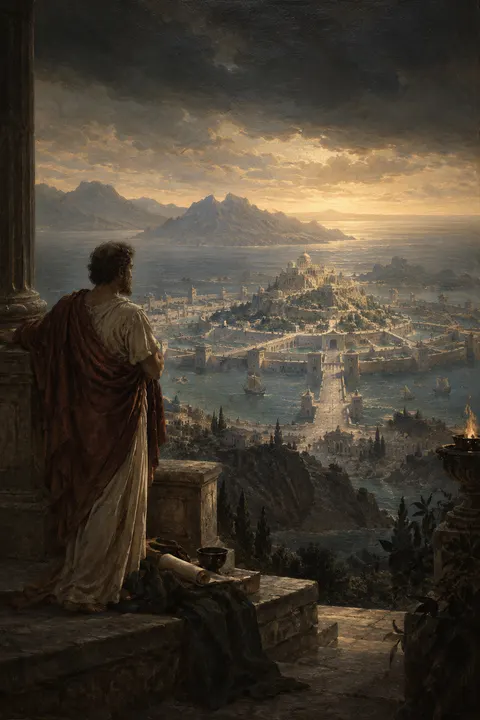
Continuing the conversation associated with Timaeus, Critias describes a remote past in which ancient Athens confronted the power of Atlantis. The surviving text gives sustained attention to the island's geography, resources, buildings, organization, and royal institutions. These details establish more than a marvellous setting: prosperity and increasing ambition create conditions for a contrast between material power and moral order. The narrative also presents Athens through an idealized account of its earlier arrangements, connecting the story with the surrounding philosophical interest in a well-ordered community. Critias survives as an unfinished work, breaking off before the promised account reaches completion. Its fascination therefore includes both the vividness of what is described and the open space left by an argument whose dramatic development readers cannot recover from the text itself.
- Political virtue
- Wealth and decline
- Imagined history
Why read it
For Plato's detailed Atlantis narrative, read as an unfinished political and philosophical story rather than a settled historical report.
Unfinished dialogue · English translation by Benjamin Jowett