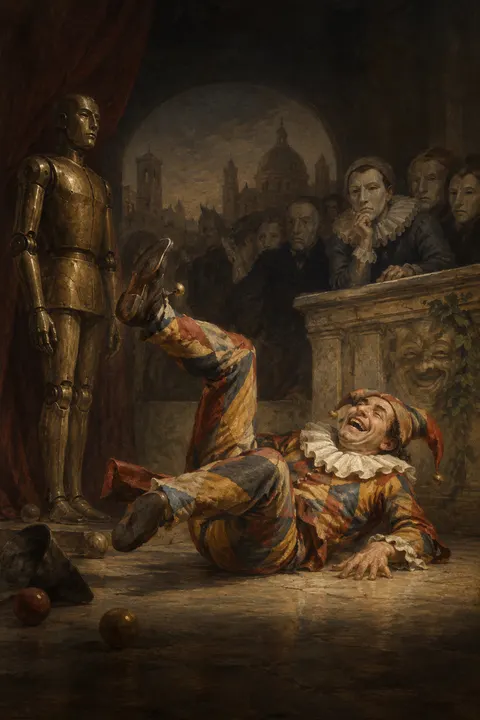
 Laughter: An Essay on the Meaning of the ComicHenri Bergson
OmniClassics · Literature
Laughter: An Essay on the Meaning of the Comic
Henri BergsonBergson follows the comic from bodily gestures to social character.
Progress is saved in this browser
About the book
Henri Bergson investigates what connects a pratfall, a verbal joke, a repeated situation, and a comic personality. He proposes that laughter often arises where something mechanical or rigid appears within living behavior, then tests this idea through bodily movement, language, theatrical situations, and character. Comedy also has a social function in his account: laughter can correct forms of inflexibility that make people ill suited to life with others. The discussion therefore moves beyond what merely amuses toward questions of attention, sympathy, habit, and the relation between art and ordinary perception. Examples from comic writing keep the philosophical inquiry concrete. This English translation by Cloudesley Brereton and Fred Rothwell was revised with Bergson's participation.
- Comedy
- Social conformity
- Habit and flexibility
Why read it
Read it for an argument that makes familiar comic effects reveal assumptions about social life.
English translation by Cloudesley Brereton and Fred Rothwell